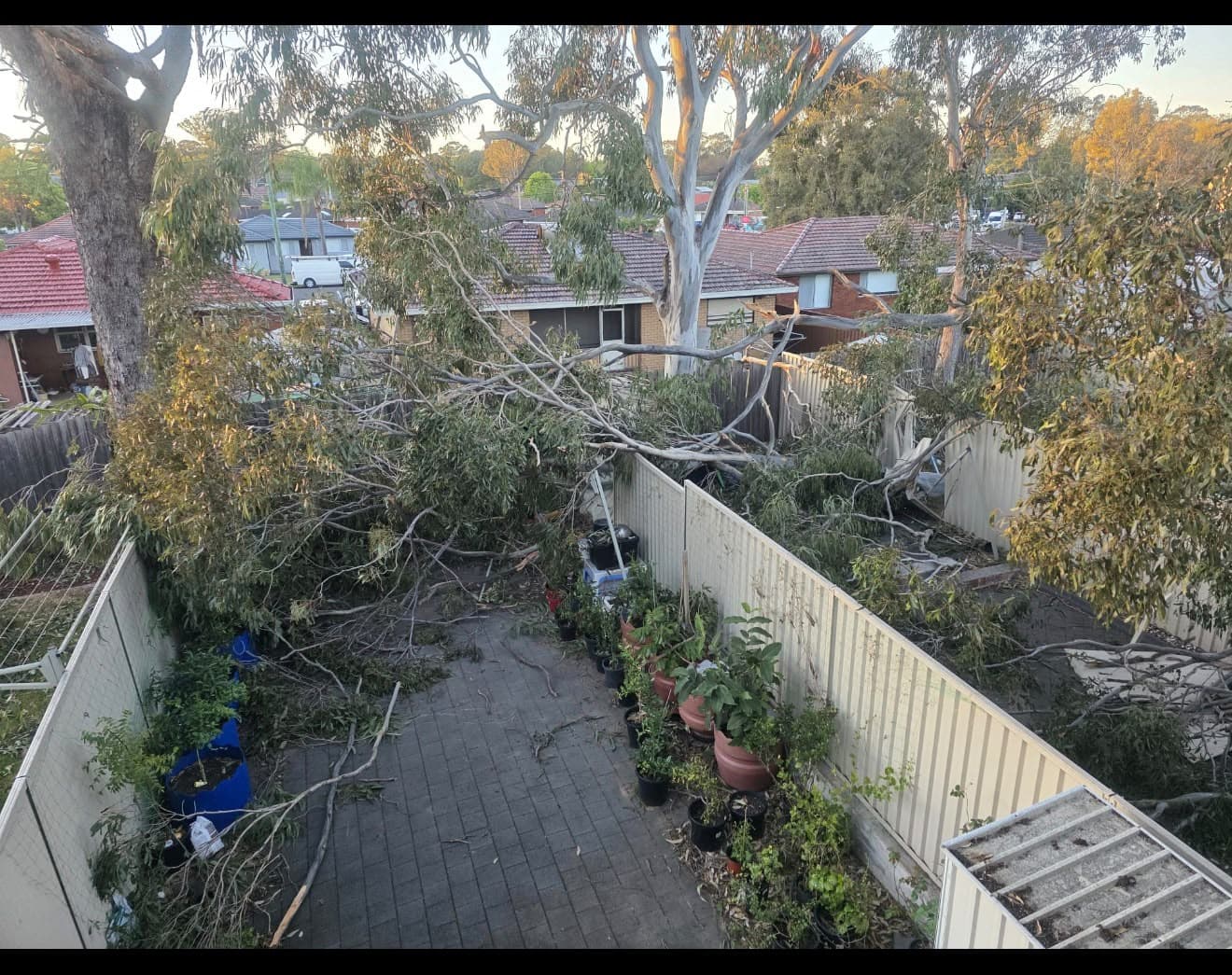
Quick answer: After a storm, keep everyone well away from the damaged tree and anything it has fallen on. Treat every fallen power line as live, and stay at least eight metres (two car lengths) away. Call 000 if anyone is in immediate danger. Report fallen lines to your electricity network. For emergency storm help, such as a tree on the house or roof damage, call NSW SES on 132 500. Do not climb the tree, cut it or pull on hanging branches. Once it is safe, photograph the damage from a distance for your insurer. A tree on a building or car, blocked access, a hanging limb or a lifting root plate is urgent. Broken branches lying clear of structures can usually wait for an arborist's assessment.
A tree that looked sound before the weather can become unpredictable after branches break, roots shift or the crown twists under load. The most common mistake is treating the aftermath like ordinary garden clean-up.
Make the area safe without handling the tree
First thing: keep everyone away from it
Keep children, pets and visitors out of the area beneath and around the tree, and anywhere it could fall or roll. Do not park or walk in that area. Storm-damaged trees often fail in stages: a branch that held on during the wind can drop later as weight shifts or the next gust arrives.
Power lines and who to call
The NSW SES storm advice (opens in new tab) is to assume fallen power lines are live and stay at least eight metres or two car lengths away. Ausgrid notes (opens in new tab) that fallen trees and vegetation around damaged equipment can hide electrical hazards. Anything touching a line, such as a branch, fence or car, can also be live. Tree work near damaged lines waits until the network has made them safe.
| Situation | Who to call |
|---|---|
| Someone is injured or in immediate danger | 000 |
| Fallen or damaged power lines, or a tree touching lines | Your electricity network: Ausgrid on 13 13 88 or Endeavour Energy on 131 003, depending on your area |
| A tree on the house, roof damage or other storm emergency help | NSW SES on 132 500 |
| Tree work once the immediate danger is managed | An arborist or tree service |
What not to do
- Do not climb the tree or lean a ladder against damaged branches.
- Do not pull hanging branches down by hand or with ropes.
- Do not stand in line with a cracked, split or bent limb.
- Do not start cutting a fallen tree or limb. Bent timber can be under tension and spring or roll when cut.
- Do not move vehicles or belongings from beneath unstable timber if that puts you in the danger area.
- Do not cut anything near power lines.
Many injuries after storms happen when a branch that looked "nearly down" moves unexpectedly once someone touches it. AA's work does not replace emergency services or the electricity network.
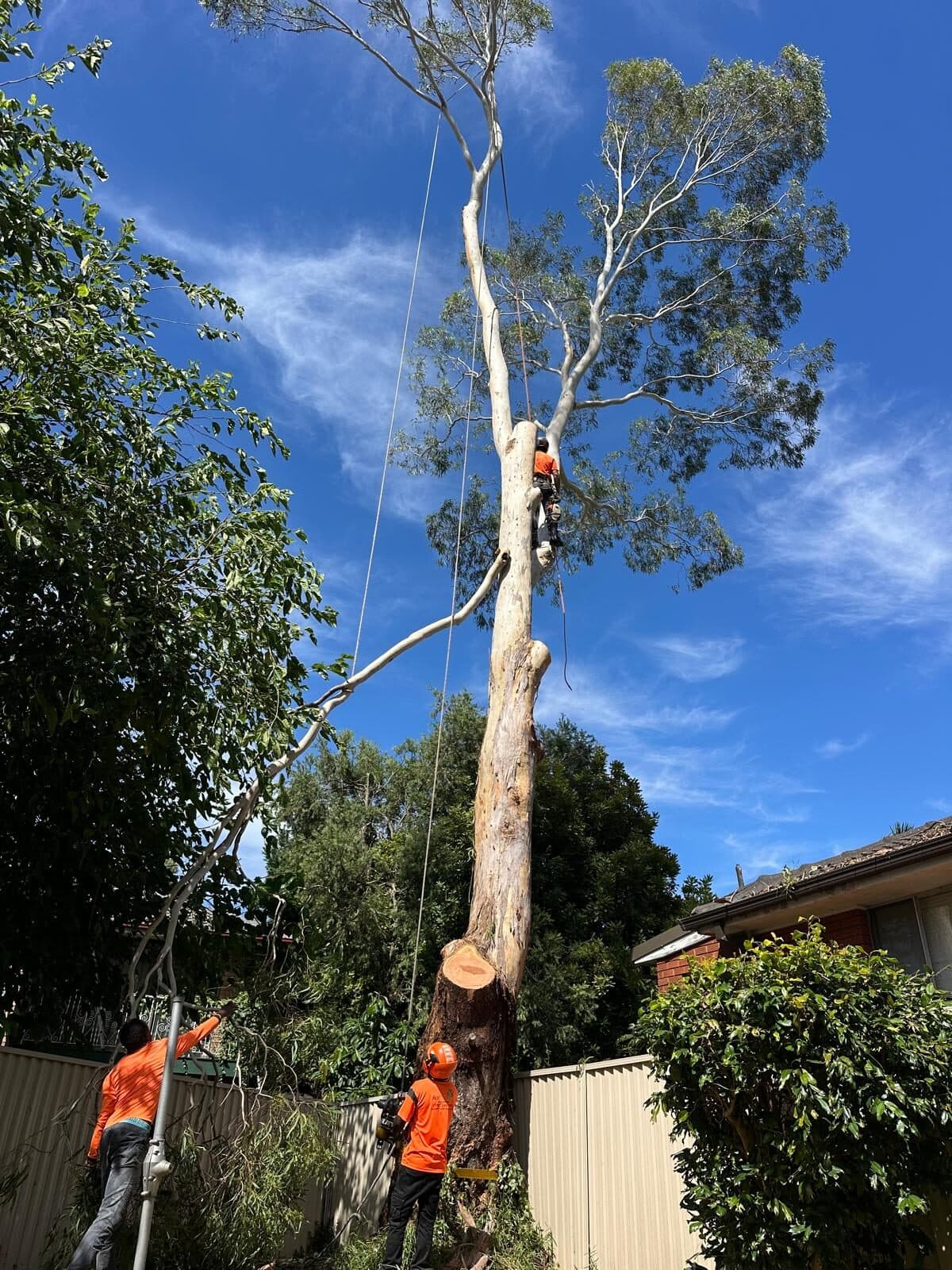
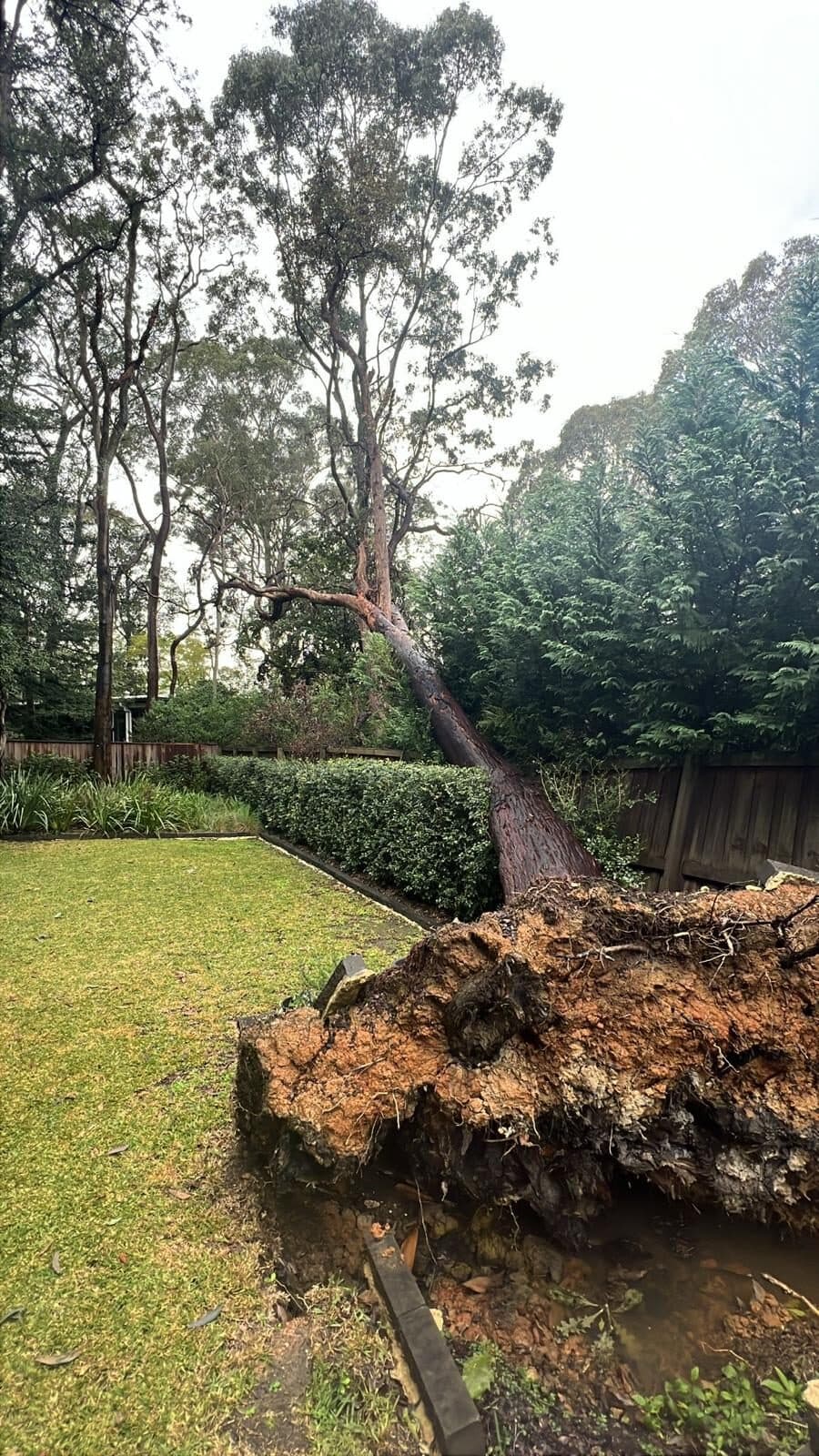
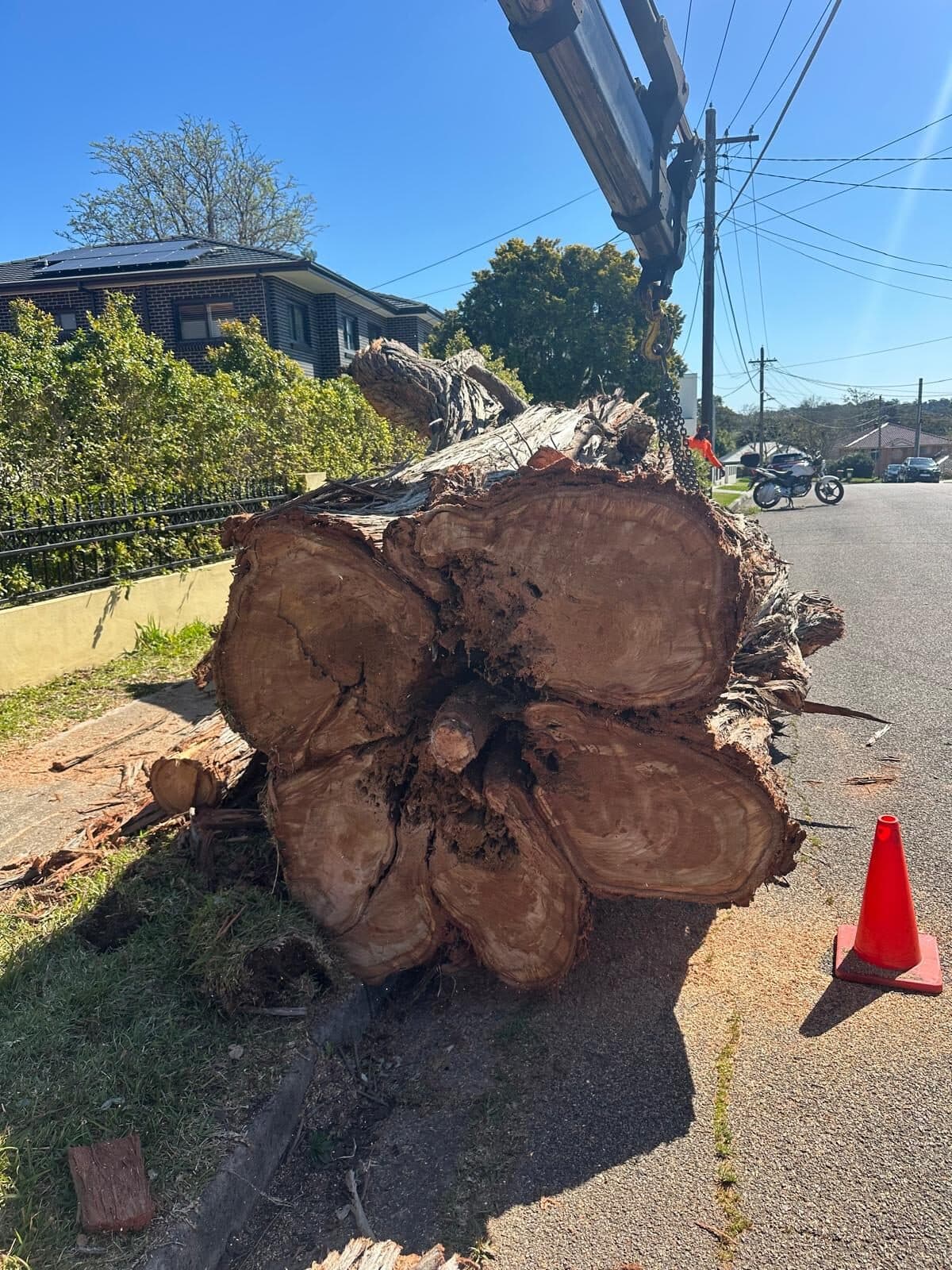
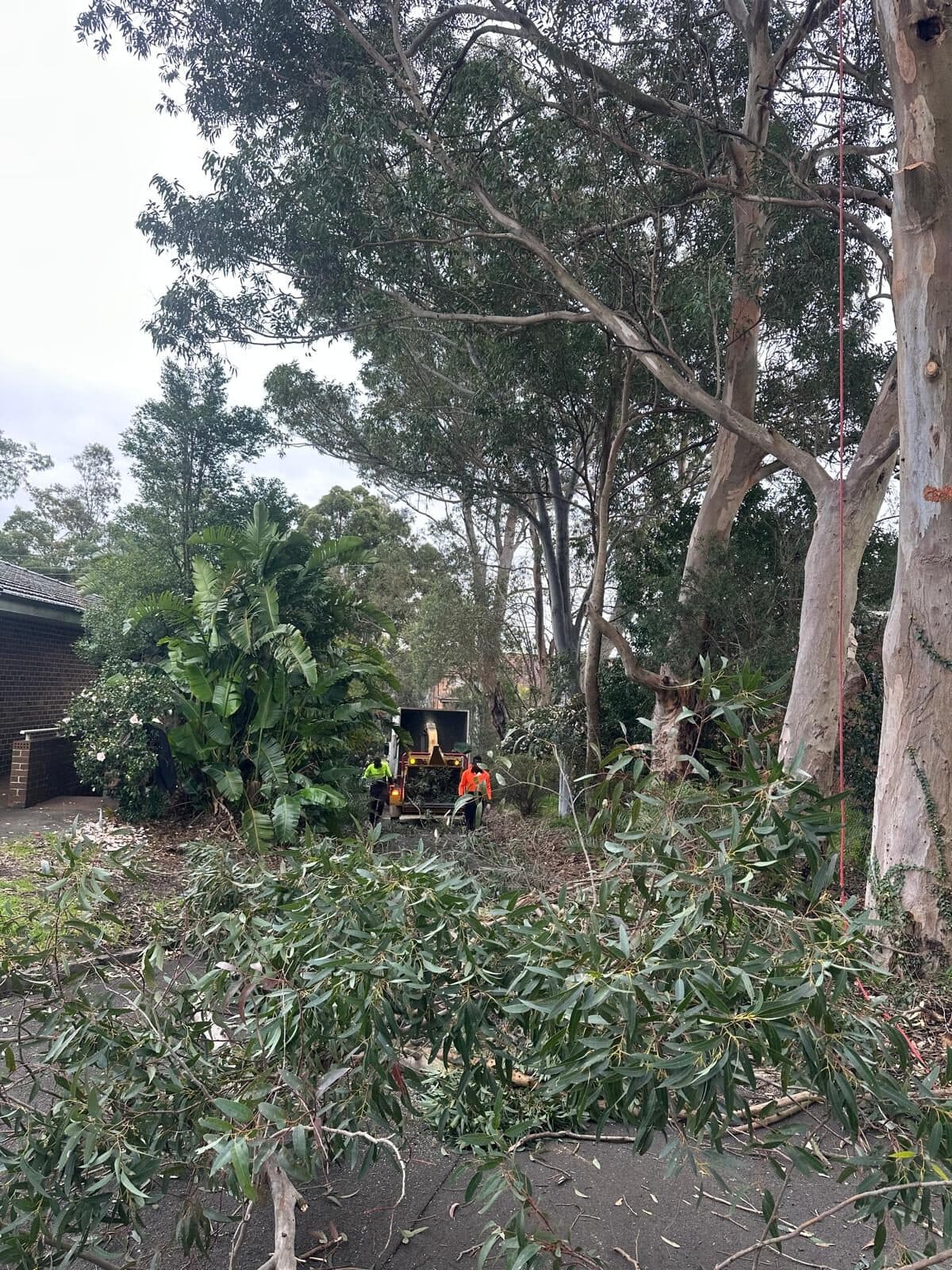
For an example of fallen-tree work, see our emergency removal across three Toongabbie backyards. The photographs show the tree across fences and decking before removal, and the backyard afterwards.
Record damage only from a safe position
Photos taken before clean-up help your insurer understand what happened. The Insurance Council of Australia's storm advice (opens in new tab) is to document damage with photos and video before cleaning up. Contact your insurer as soon as possible, and speak to them before authorising building work. Ask for their approval in writing, because unauthorised work may not be covered.
From a safe distance, useful photos include:
- the whole tree, showing where it stands in relation to the house and boundaries
- the point where it broke, split or lifted
- the base of the trunk and any soil or root movement
- each damaged structure, car, fence or roof section
- access to the site, such as driveways, gates and paths
- a wider view showing the street or neighbouring properties, if they are involved
Keep emergency attendance details, council correspondence and receipts for any work. Urgent work to make a site safe should not wait for paperwork. Tell your insurer what was needed and keep a record of it.
Never enter an exclusion zone, stand under a damaged canopy or move timber to get a better photo. Evidence is useful, but it never comes before safety.
Assess what remains
What to look for from a safe distance
Without walking under the canopy, look for:
- hanging, split or torn branches, or branches caught in the canopy
- fresh cracks in the trunk or at branch unions
- stripped bark or exposed, torn wood
- a new lean, or a change in the angle of the trunk
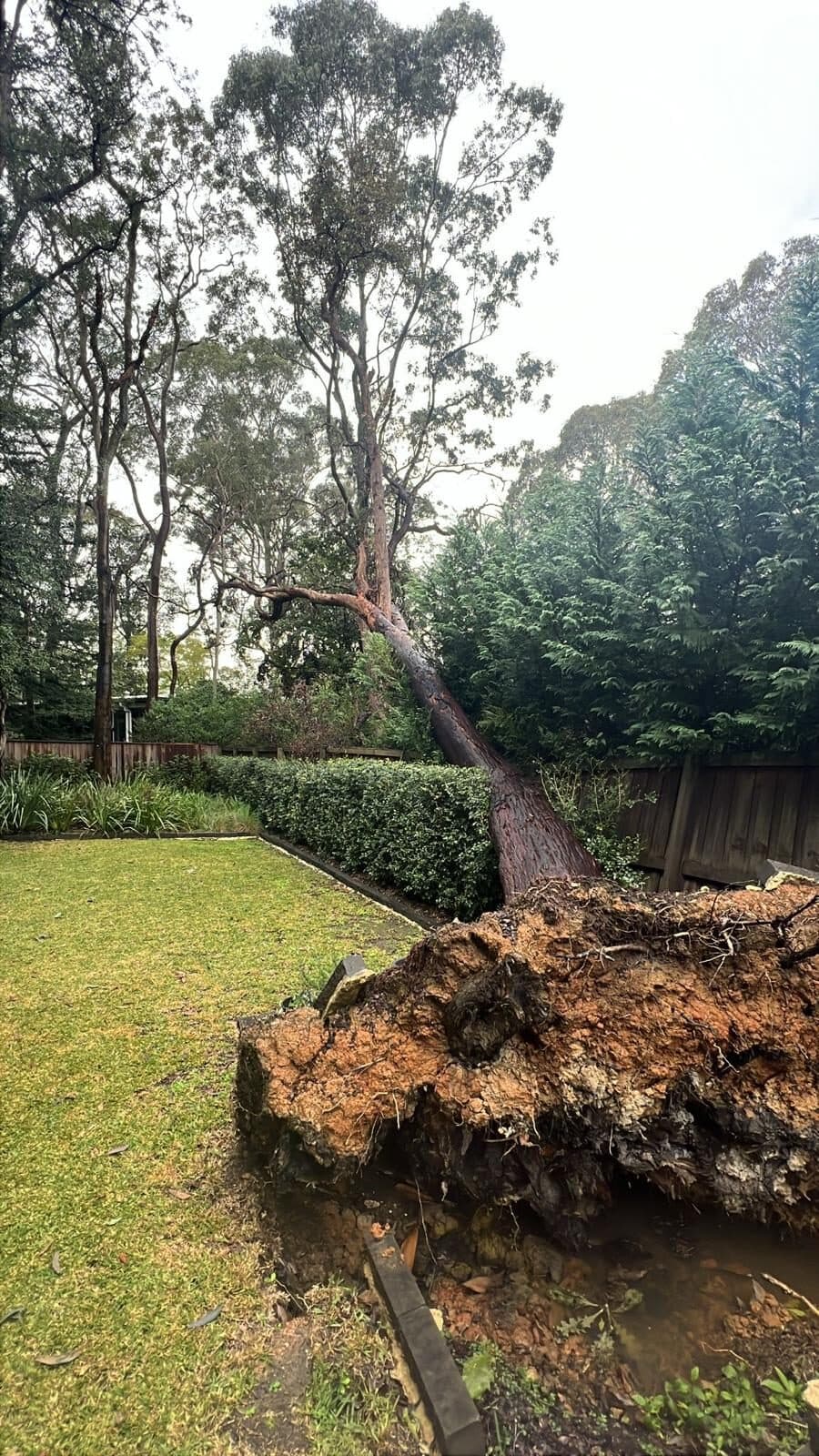
- soil lifting, cracking or mounding on one side of the base
- exposed or snapped roots
When it is urgent
Treat it as urgent and call for help if:
- a tree or large limb is on a house, car, shed or fence
- a branch is hanging over a doorway, driveway, path or play area
- the tree is touching or close to power lines
- the tree blocks the only access to the property
- the base has shifted or the root plate is lifting
- a large limb is partly attached and moving
Damage that can usually wait for a scheduled assessment includes small branches already on the ground clear of structures, minor broken tips and leaf litter. Keep an eye on the tree in the meantime.
Why a storm-damaged tree is hard to read
A canopy can look mostly intact while the structure underneath has changed. Hidden problems include fibres torn at branch unions, twisting through the crown, a partly failed root plate and broken limbs held up by others. Some cracks only open when the tree moves in the next wind. That is why storm work is often more complex than routine pruning or removal.
Have a look at the other trees too
A storm that damages one tree may have stressed others on the site. Check nearby mature trees, trees sharing the same root area, boundary trees and any canopy over the roof or paths. Look for the same warning signs. Our tree warning-sign guide explains what deserves a closer look.
Pruning, removal and cleanup are different tasks
Pruning or removal after storm damage
Once the site is assessed, the outcome is usually one of these:
- selective pruning to remove broken and unsafe branches, where the tree can reasonably stay
- a reduction of the damaged part of the canopy
- sectional removal of the tree, piece by piece, where it cannot safely remain
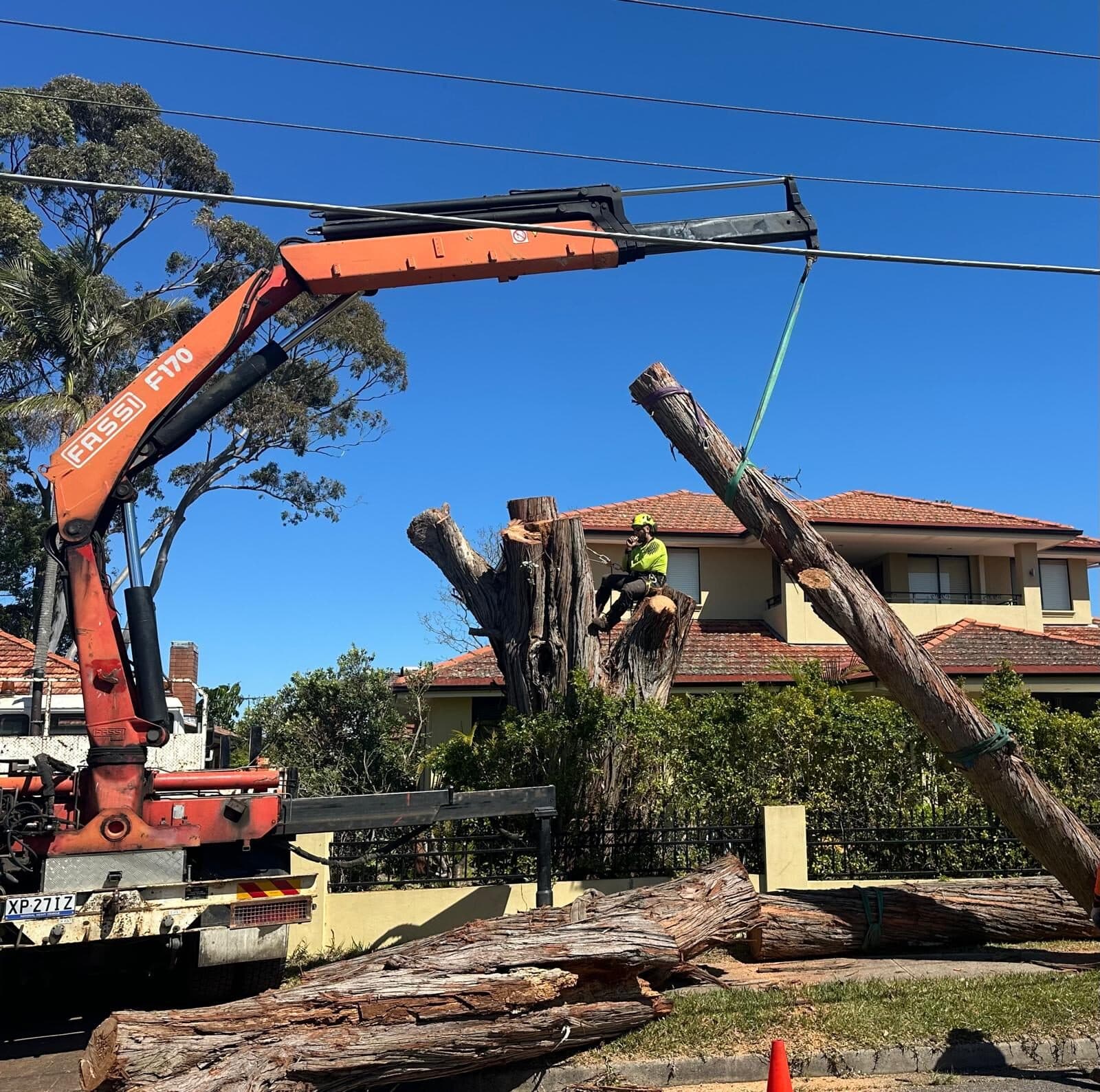
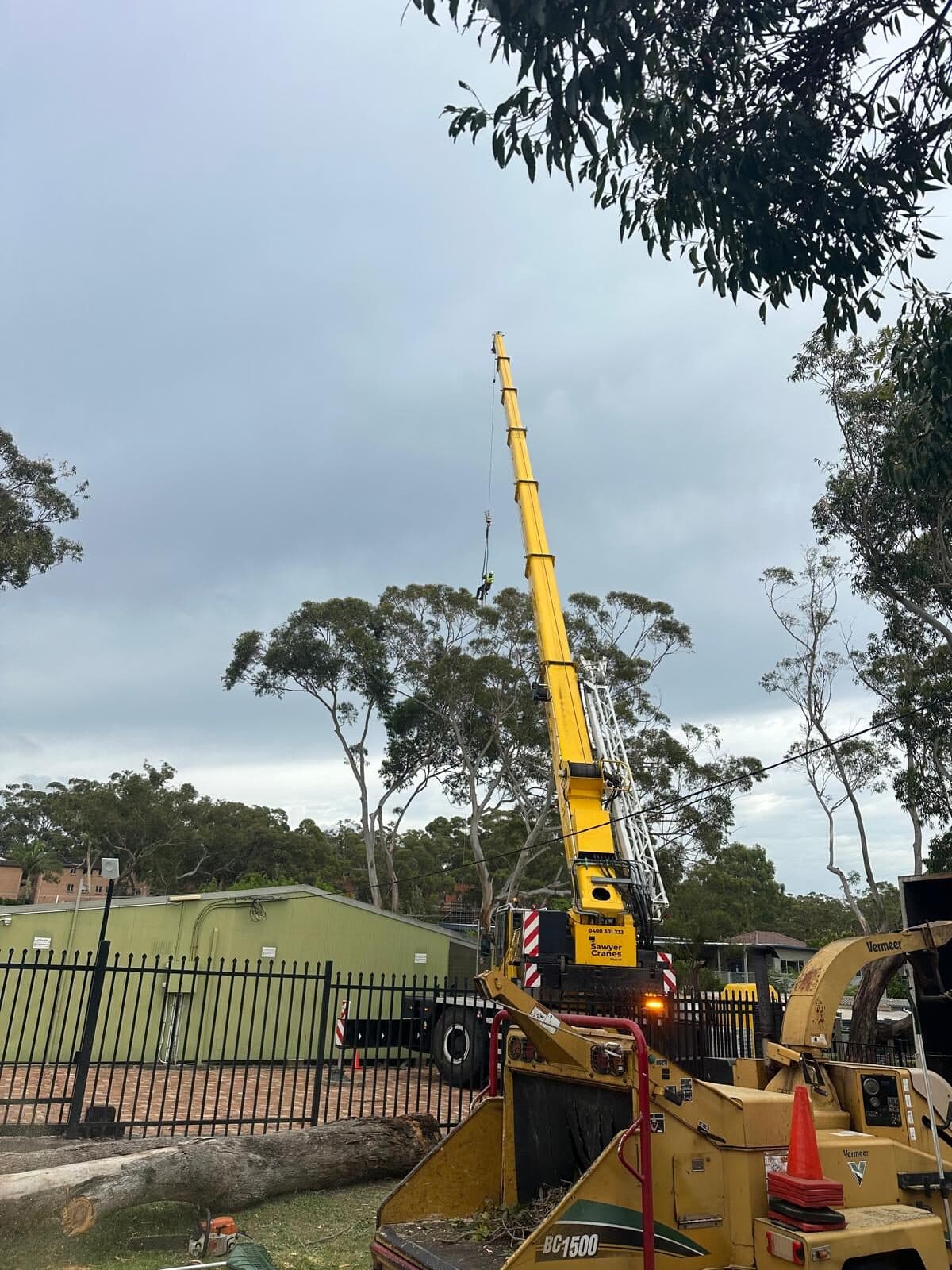
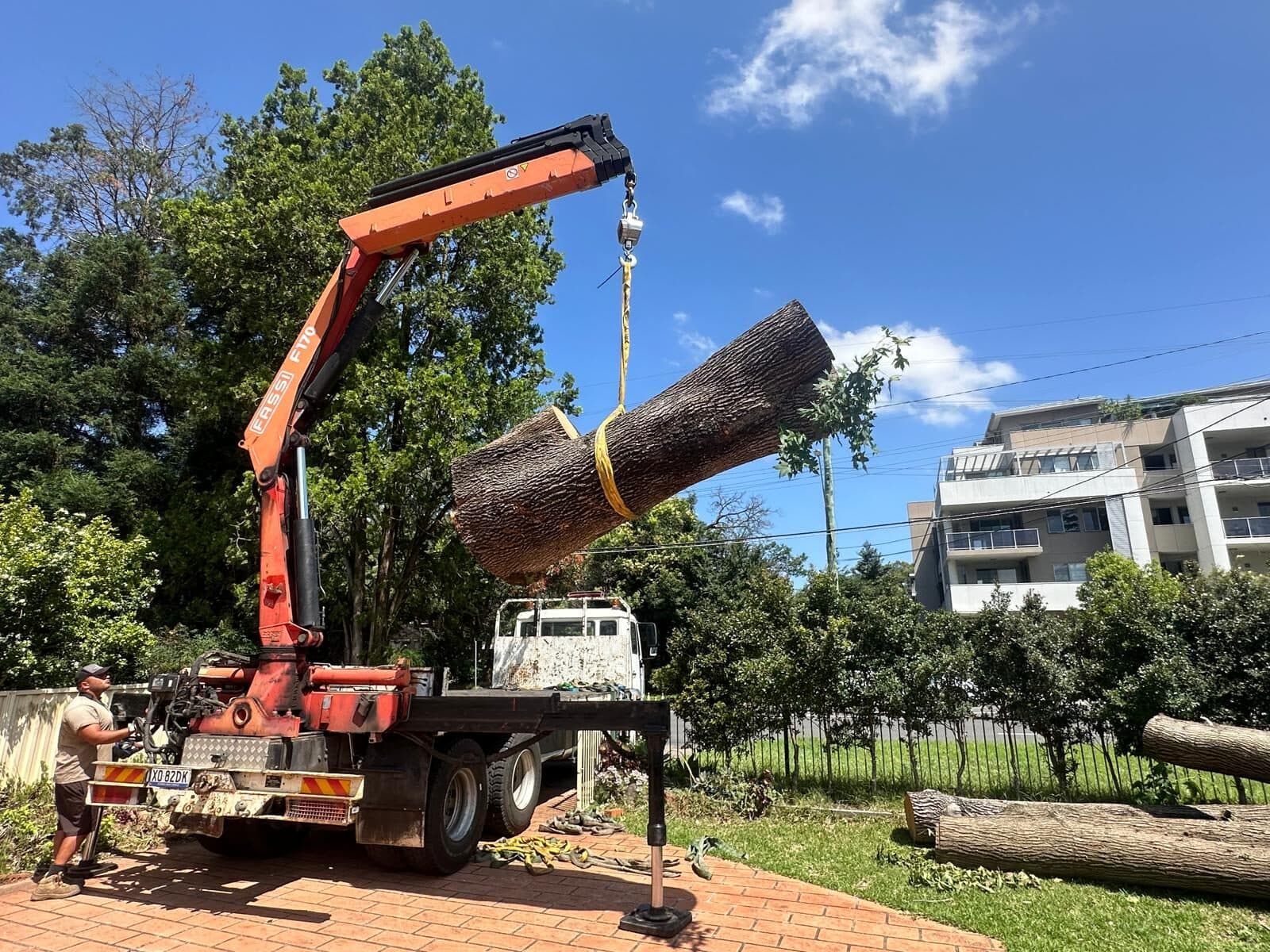
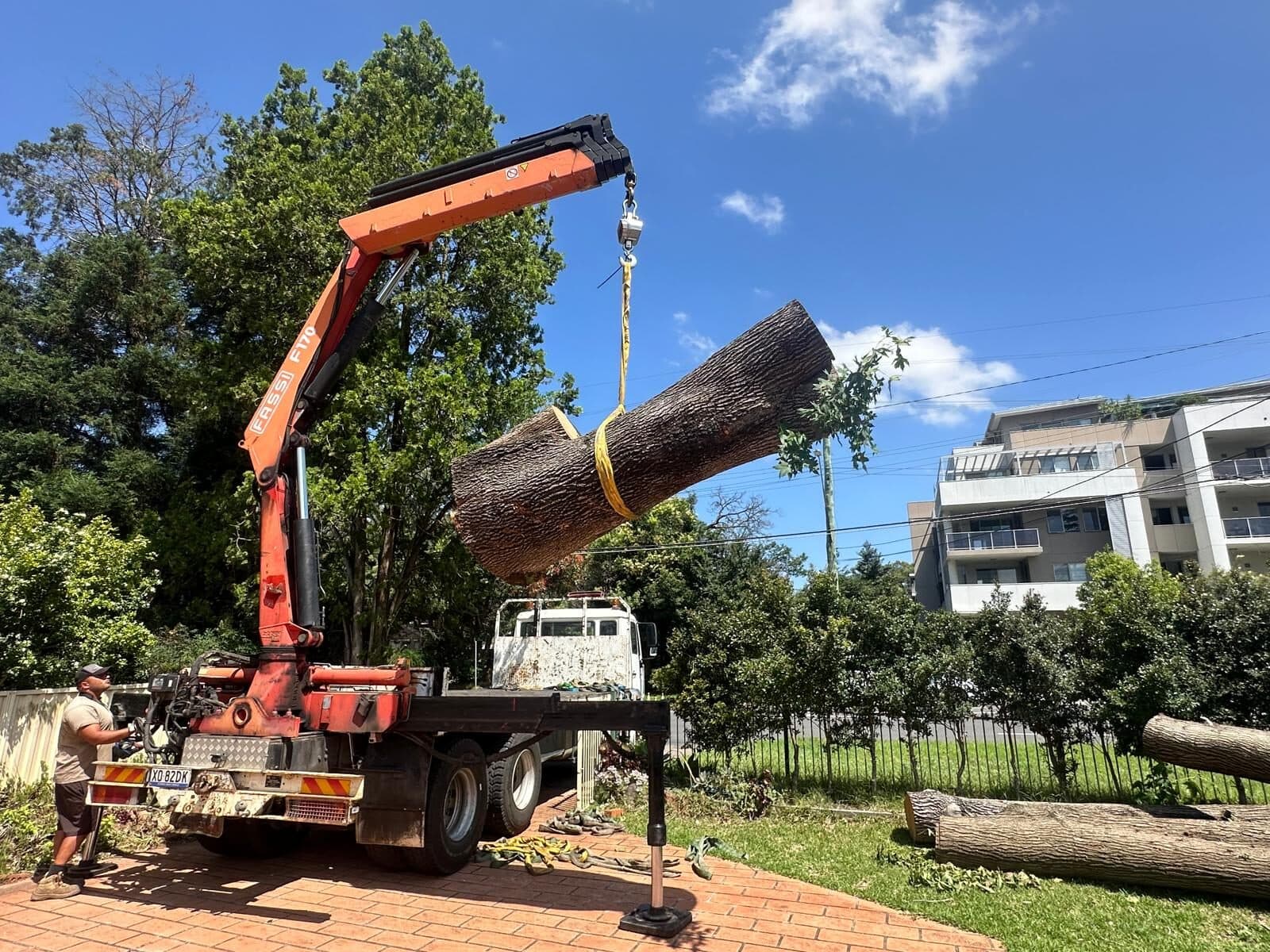
Storm-damaged timber is often bent, tangled or under tension. Access and nearby buildings influence how sections are cut and lowered. A crane may suit some sites, but it is not automatically the safest or necessary method.
When a storm job becomes a removal
Damage does not automatically mean the tree has to come down, and a standing tree is not proof it is stable. Removal becomes more likely when:
- the trunk has split or failed
- the root plate has moved or lifted
- several large limbs have failed
- what remains of the canopy is too unbalanced or damaged to retain
- future pruning would only be a temporary fix
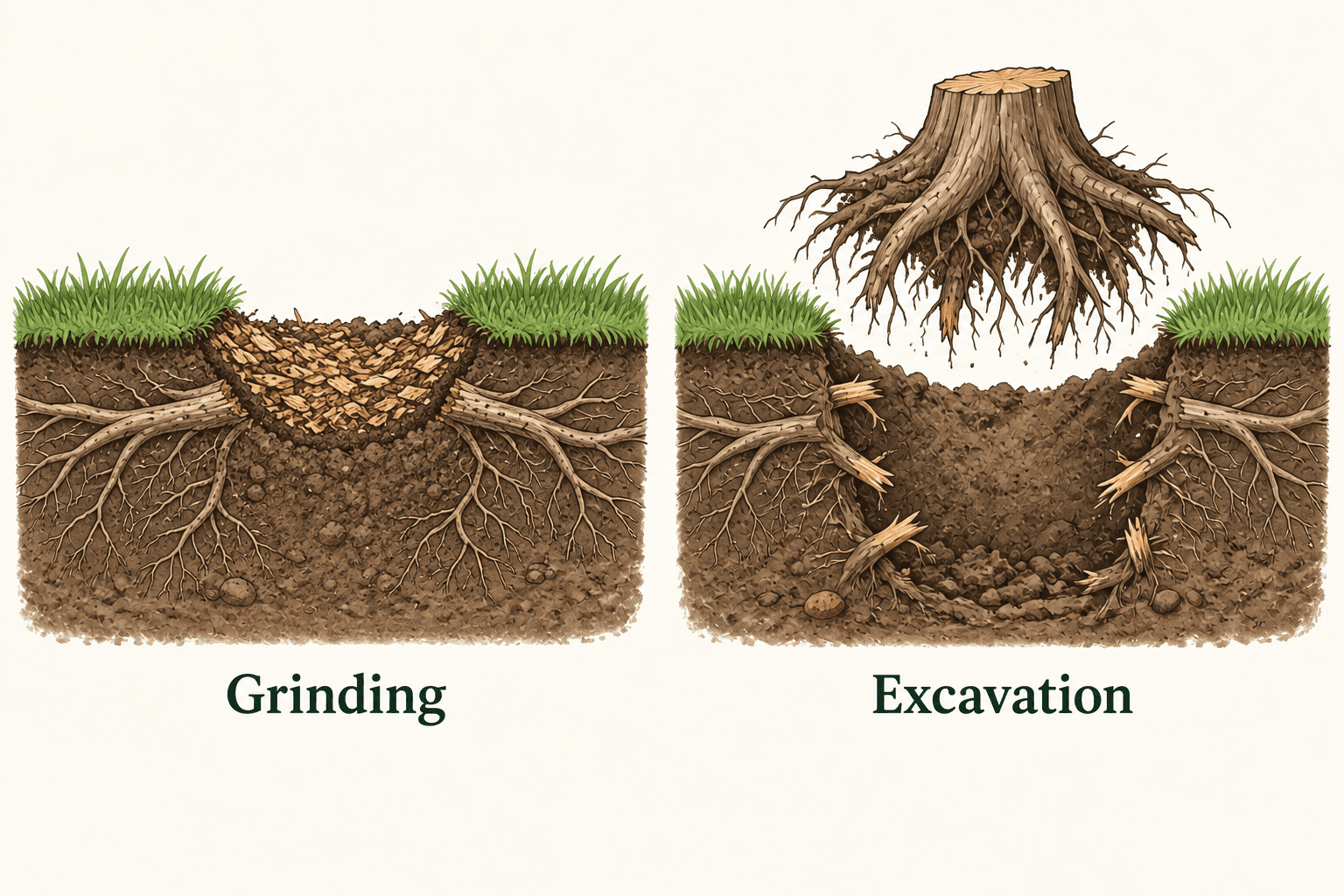
Clean-up is its own task. Timber handling, green-waste removal and any later stump grinding should be clearly scoped. A tree made safe does not mean the ground is ready for repairs or landscaping.
AA answers calls and attends urgent tree work across its Sydney service area 24 hours a day, seven days a week. For urgent tree work, call 0497 777 735 rather than send a form. Arrival times depend on the situation and safe access.
Check the council's storm and dead-tree rules
Councils have different rules for trees that pose an imminent risk, trees that have fallen and dead trees. Some require written confirmation before work. Others specify photos or reports to keep. A storm does not create blanket permission to remove any damaged tree. Use the Sydney council approval guide to find the requirements for your address. Where the council requires an independent report, arrange the specified consultant separately from the physical tree work. Follow emergency responders' directions where there is immediate danger.
Common questions
Originally published .

AA Tree Services Sydney
Tree services in Sydney
Our team includes an AQF Level 3-qualified arborist with more than 15 years of tree-work experience. We provide tree removal, pruning, lopping, tall hedge trimming and stump grinding for homes, strata and commercial properties across Sydney, and write these guides from that work.
About AA Tree Services