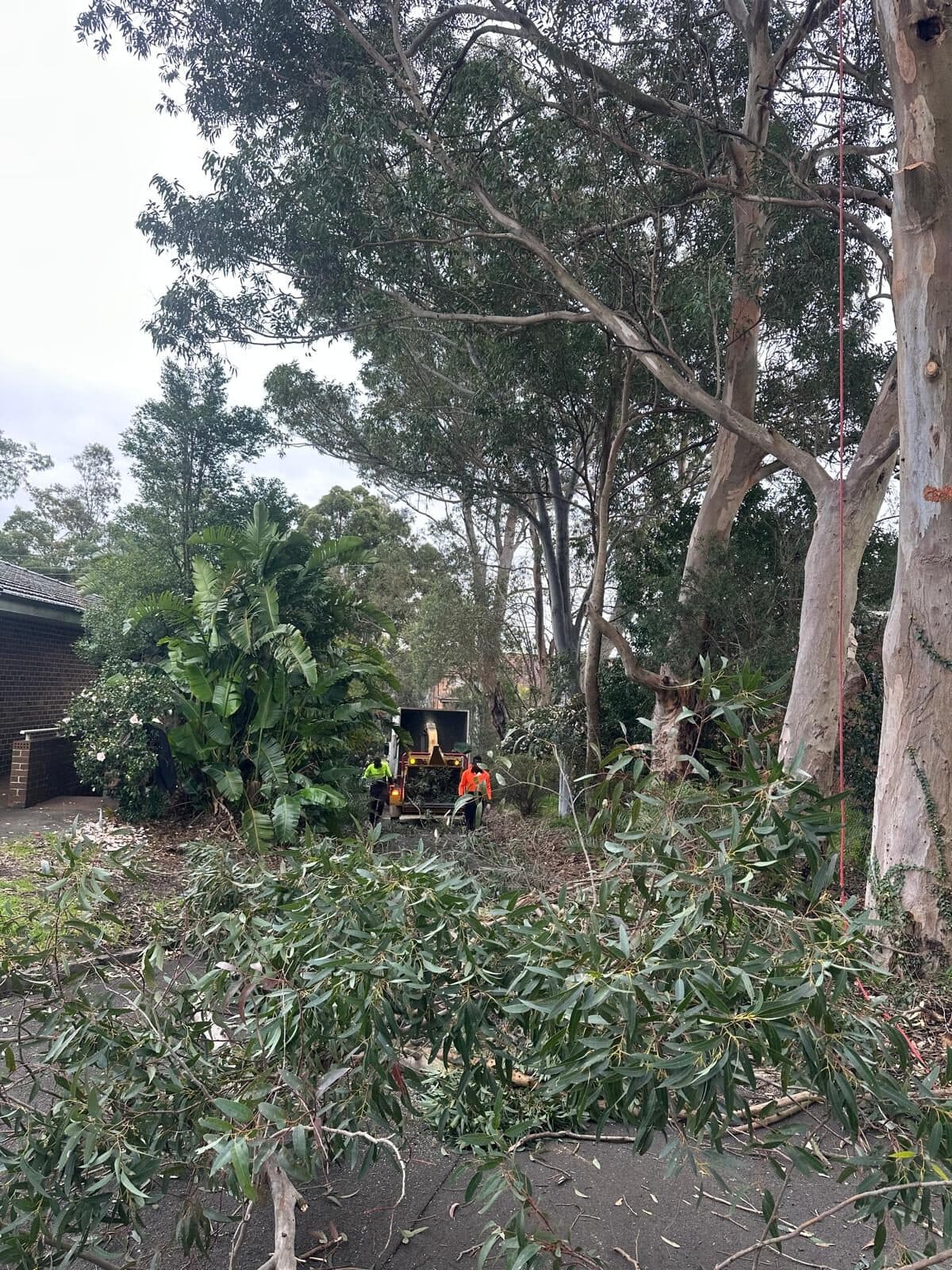
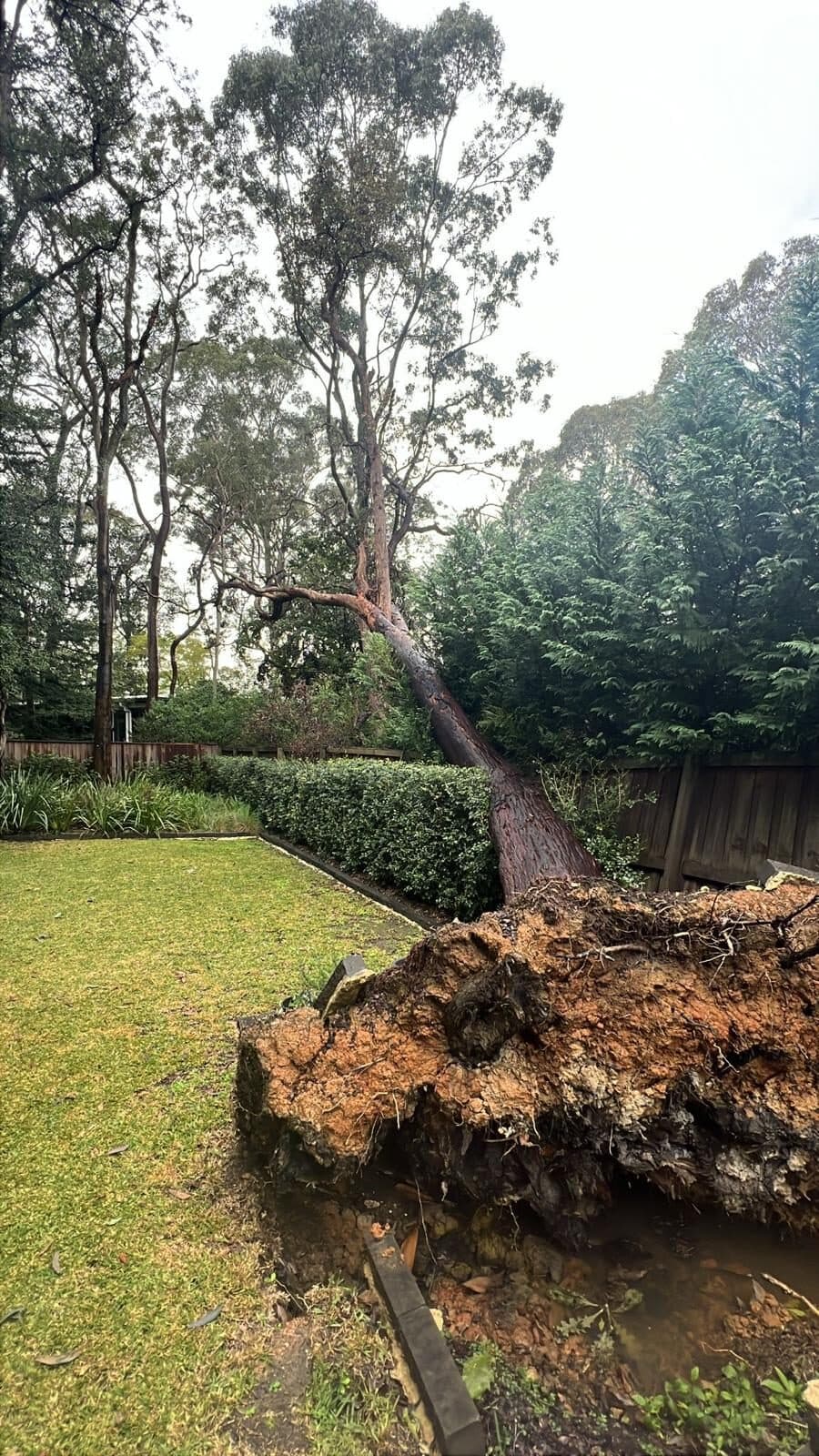
Changes in a tree’s branches, trunk, roots or canopy can indicate a need for professional attention. The important questions are what has changed, how quickly it happened and what could be affected if a branch or the tree falls. A warning sign is a reason to assess the tree—not proof that it must be removed.
When to keep clear and get help
A hanging limb, a newly leaning tree or lifting roots can create an immediate concern. Keep people and pets away from the possible fall area. Do not climb the tree, pull on damaged branches or cut into a fallen tree that may still be under tension.
For a life-threatening emergency, call 000. For emergency storm assistance, call NSW SES on 132 500. Stay away from fallen power lines and trees touching them; contact the electricity network or emergency services.
NSW SES explains when to request emergency assistance (opens in new tab). Non-emergency tree work is a separate service and does not come with a guaranteed response time.
Seven warning signs to recognise
1. Dead or hanging branches
A detached branch caught in the canopy can fall, even if it has not reached the ground. Large dead branches above a roof, path or frequently used area also need attention.
Small dead twigs can occur in a living tree. Their presence alone does not establish widespread decline; the size, location and extent of deadwood matter.
2. Cracks or splits in the trunk or the big limbs
Fresh splits, a crack that is widening or separation at a major branch attachment need assessment. Damage can affect how a tree carries the weight of its canopy.
Observe from a safe position. Do not approach a split to test movement or assume that a narrow opening is shallow.
3. A new lean, or roots lifting
A longstanding lean is different from a recent change in angle. Newly raised soil, cracking around the base or an exposed root plate may accompany movement.
A changed lean after rain, wind or nearby excavation deserves prompt attention.
4. Fungus, cavities or decay around the base
Fungal growth attached to a trunk, a cavity or visibly deteriorating wood can indicate a problem that needs closer investigation. The location and extent of damage matter, particularly around the base and major branch attachments.
Neither a hollow nor a fungal growth alone establishes the likelihood of failure. A photograph cannot show how much sound supporting wood remains.
5. A thinning canopy, dieback or repeated leaf loss
Look for changes relative to the tree’s usual seasonal growth: dying branch tips, a progressively sparse canopy or poor recovery over successive seasons.
Possible causes include root disturbance, soil conditions, water stress, pests or disease. Leaf loss is not a diagnosis, and normal seasonal change needs to be distinguished from decline.
6. Branches on the house, the roof, the fence or the driveway
Branches rubbing on roofing, walls or other structures may need clearance management. Overhanging growth is not automatically an emergency or a reason for removal.
Suitable tree pruning can sometimes create clearance while retaining the tree. The available space, branch structure and amount of cutting required determine whether that is a reasonable option.
7. Fresh storm damage
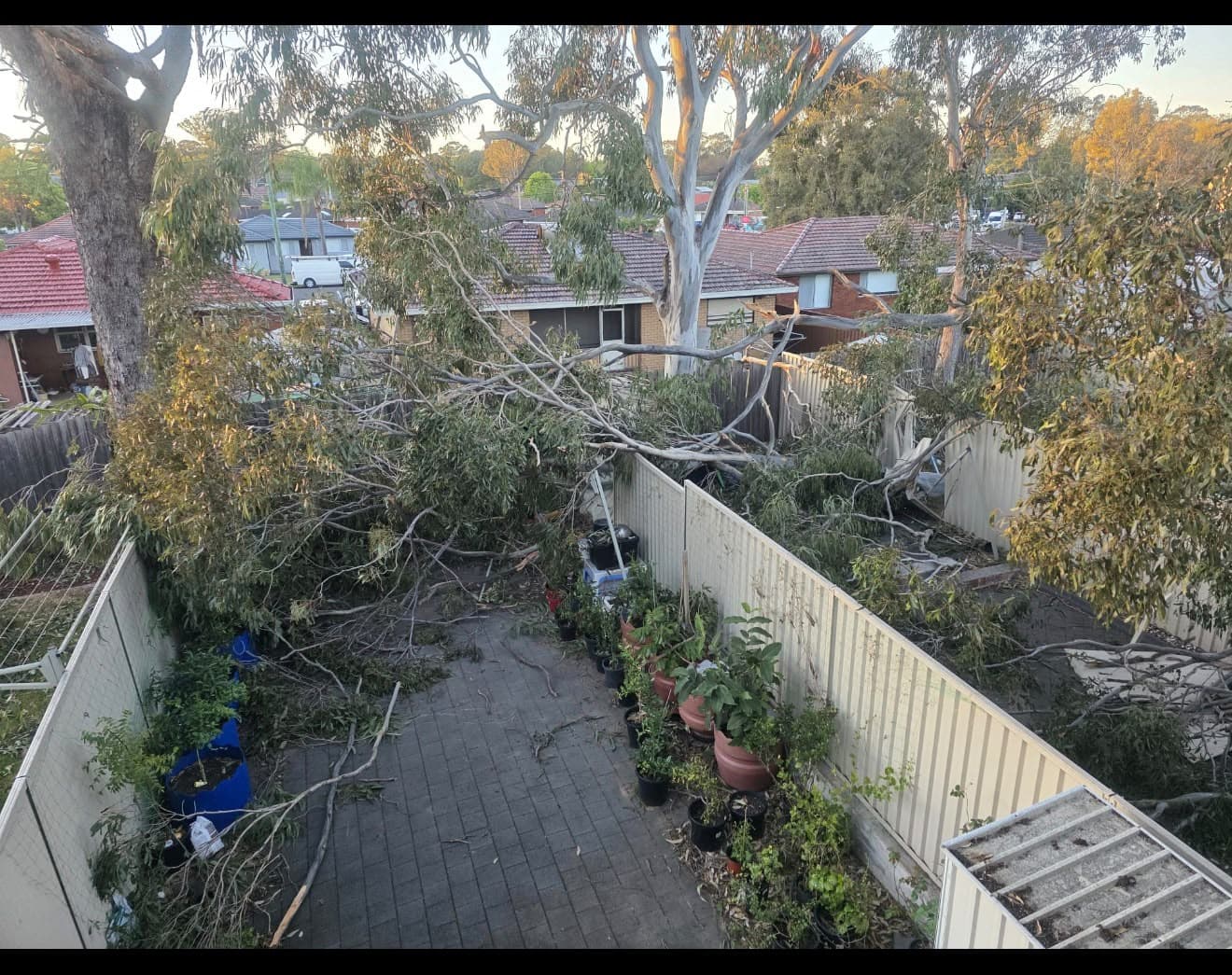
After a storm, watch for broken limbs caught above ground, split branches, a changed lean or soil movement at the base. A tree may have damage beyond the most obvious fallen branch.
Stay clear while conditions are unsafe. Our storm-damaged tree guide explains the next steps once immediate danger has been addressed.
What an assessment can establish
Useful observations include when the change appeared, recent storms or excavation, and whether the affected area is near a building or somewhere people regularly pass. Existing photographs can help explain a change, but do not enter the fall area to obtain them.
An on-site assessment considers the tree and its surroundings together. Depending on the findings, management may involve selective pruning, monitoring or tree removal. A formal risk assessment or written report may require an independent consulting arborist; AA’s practical tree work is separate from report preparation.
The International Society of Arboriculture’s tree-risk guidance (opens in new tab) explains why visible defects, potential targets and suitable management need to be considered together.
Common questions
Originally published .

AA Tree Services Sydney
Tree services in Sydney
Our team includes an AQF Level 3-qualified arborist with more than 15 years of tree-work experience. We provide tree removal, pruning, lopping, tall hedge trimming and stump grinding for homes, strata and commercial properties across Sydney, and write these guides from that work.
About AA Tree Services