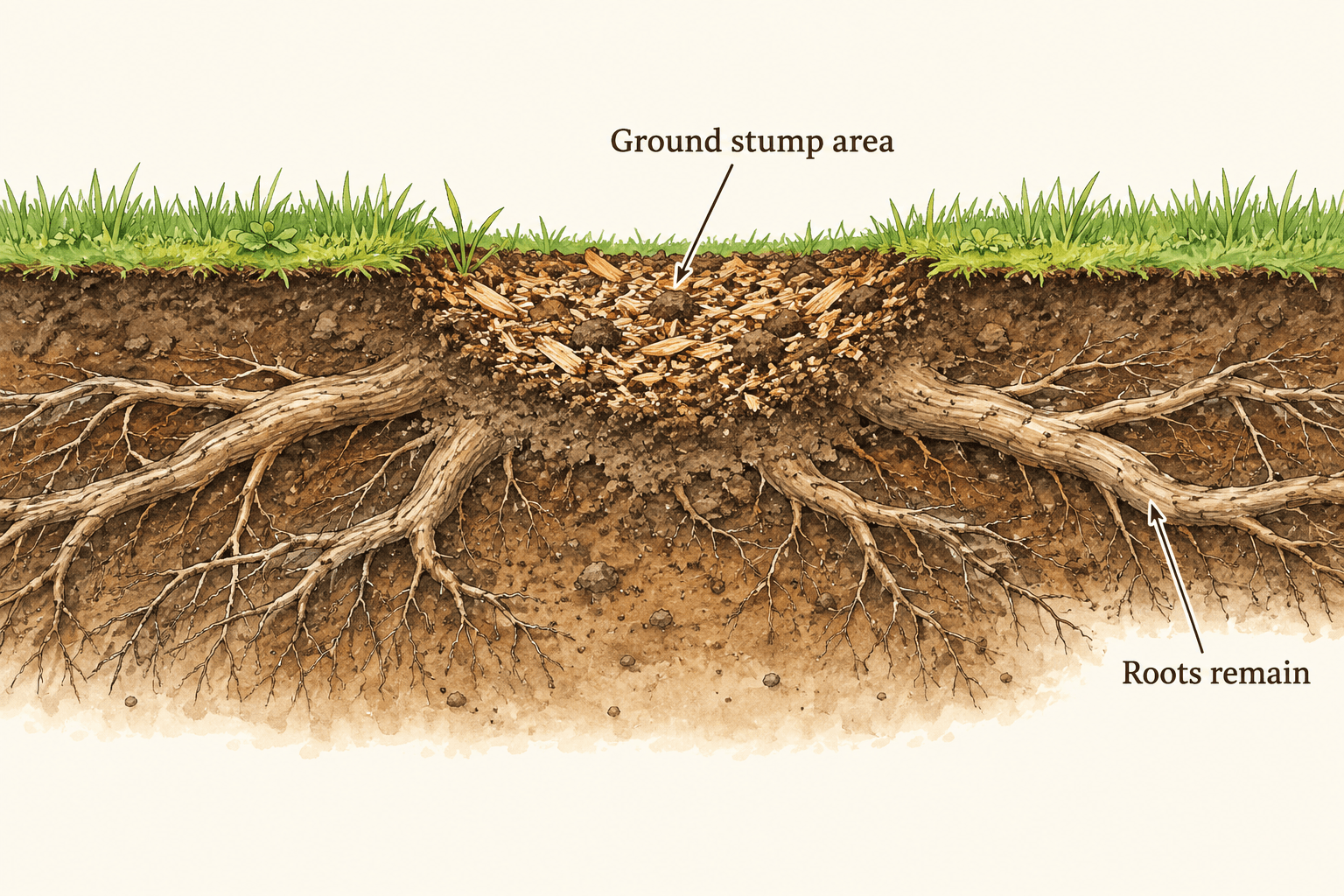
Quick answer: Stump grinding uses a machine with a rotating cutting wheel to reduce a stump and its surrounding root flare to wood chips below ground level. It removes the visible obstacle without digging out the whole root system. Roots beyond the ground area stay underground and decay over time. The job depends on the stump's width, how the machine reaches it, what lies around and beneath it, and the finish you need afterwards. Lawn, a garden bed, a replacement tree and paving each need different preparation.
Grinding is the usual way to finish a tree removal on a residential property. It also suits an old stump that has sat in a lawn or garden bed for years. This guide explains how it works, what it leaves behind and how to plan the job.
What the machine removes
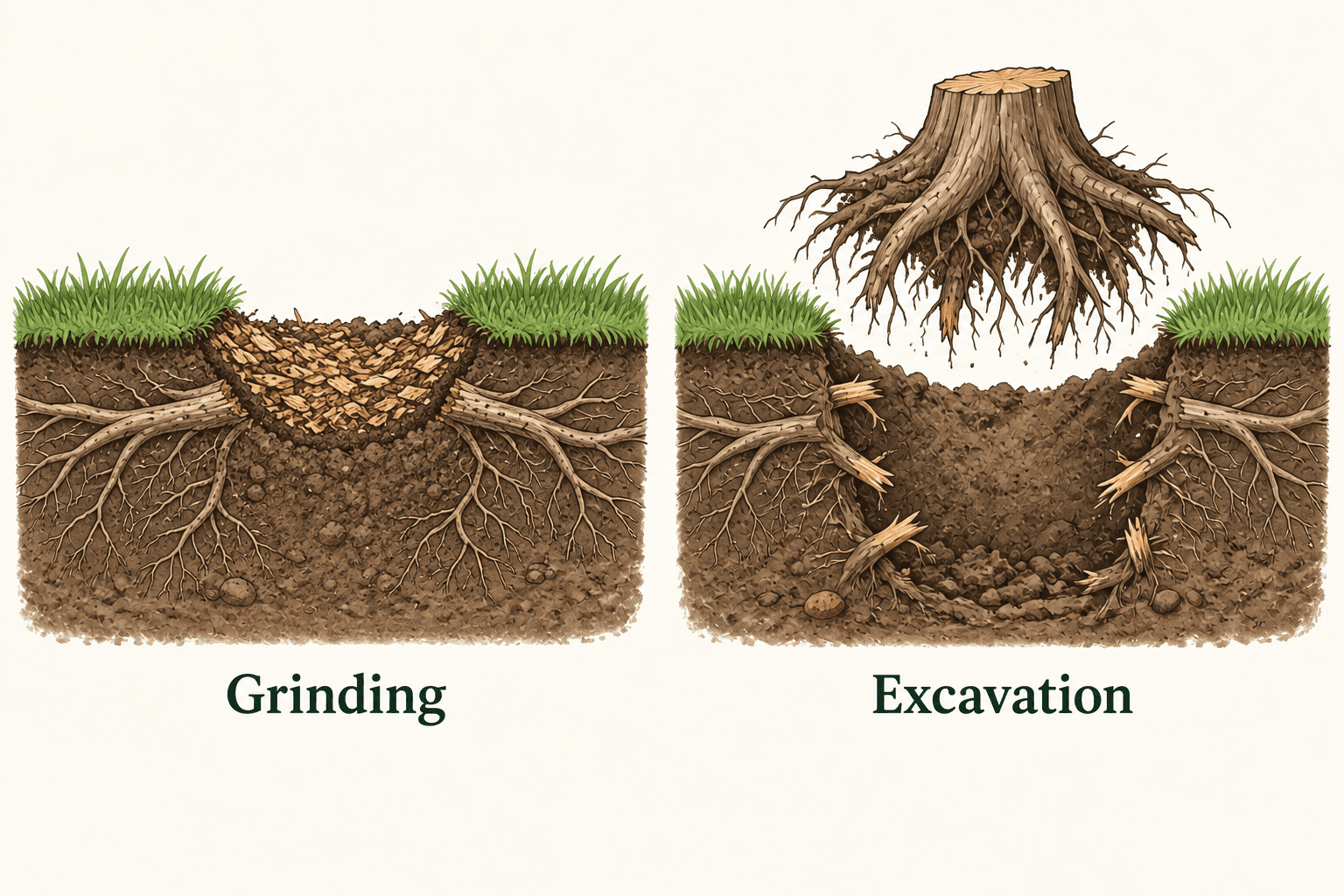
What grinding actually does
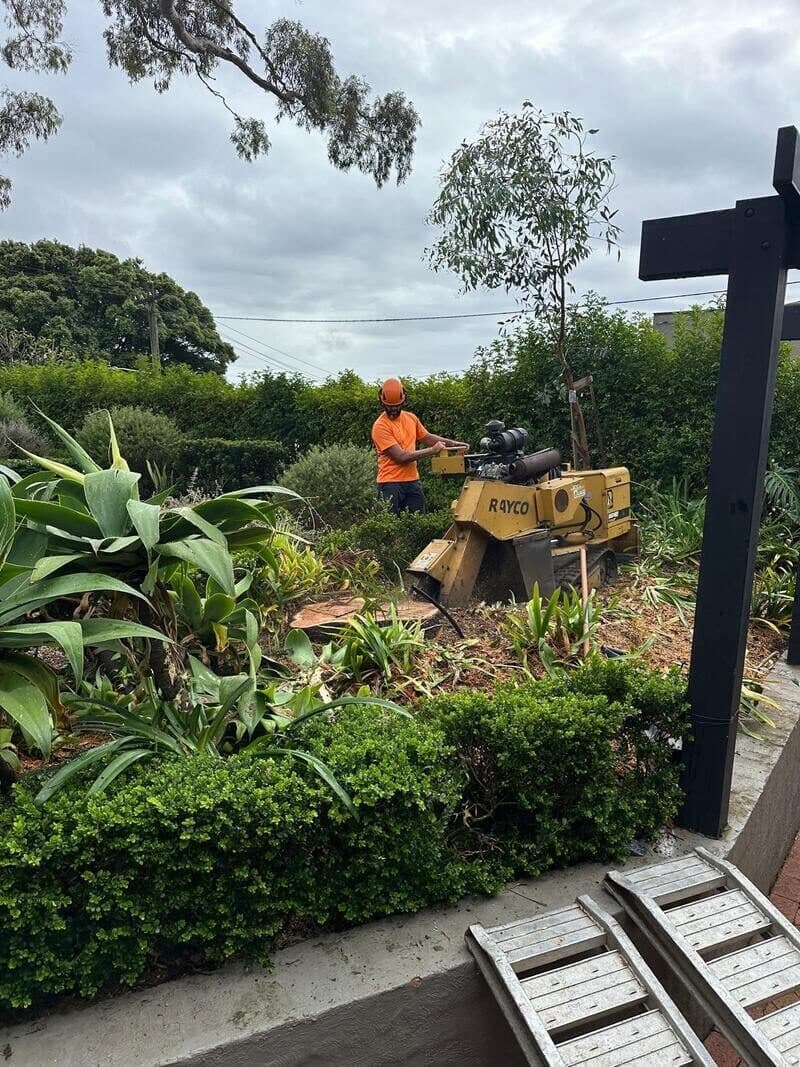
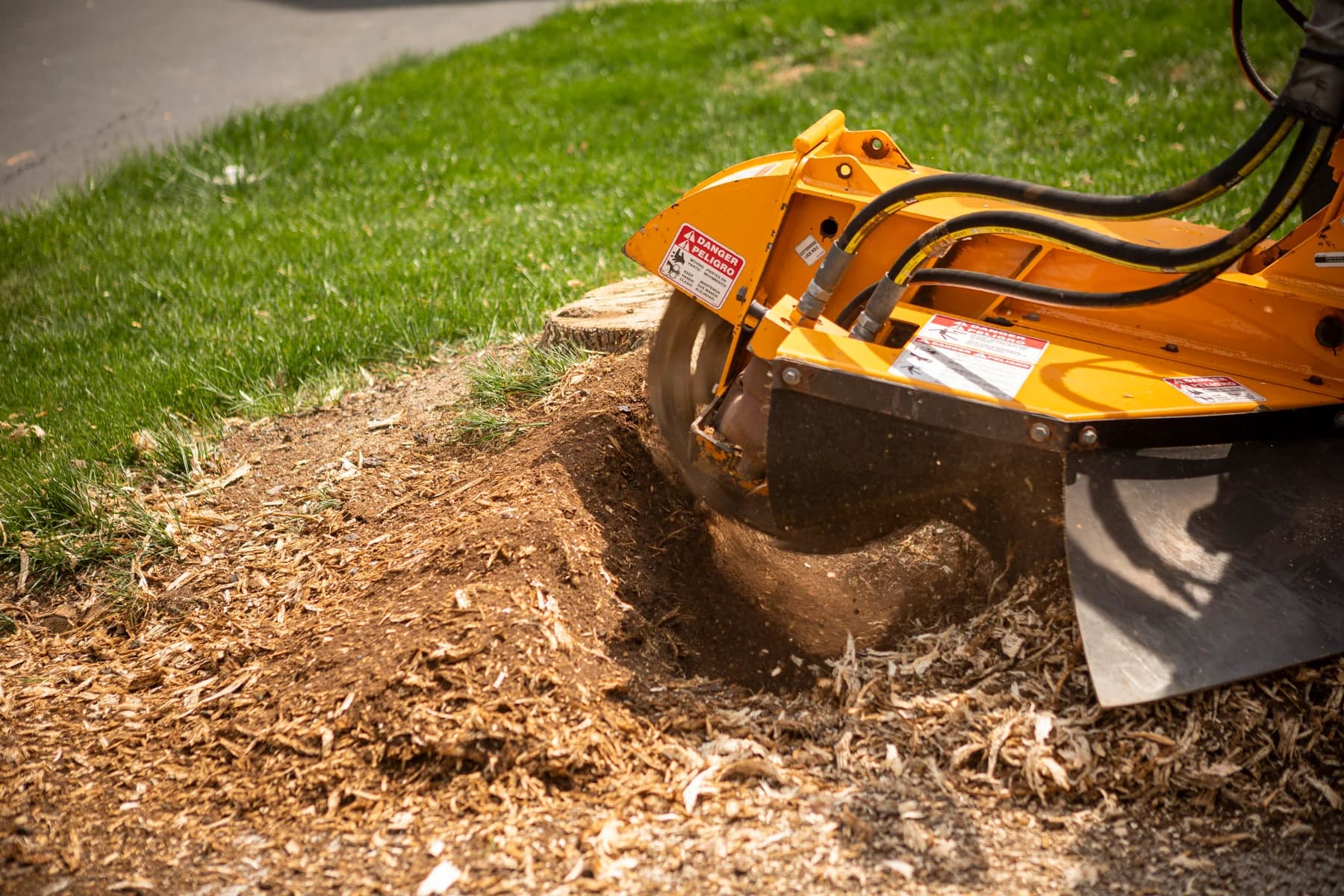
A stump grinder has a heavy cutting wheel fitted with hardened teeth. The operator positions the machine at the stump and lowers the spinning wheel onto the wood. The wheel is then swept from side to side, working down through the stump in passes. A typical job runs like this:
- Check the site. Confirm the stump size, the root flare, the access route and any known buried services, structures or retained trees nearby.
- Prepare the area. Clear loose objects, protect windows, vehicles and nearby surfaces where needed, and keep people and pets well away while the machine runs.
- Grind the stump. Reduce the stump and the agreed surface roots to chips below the surrounding ground.
- Deal with the grindings. Leave, spread or remove the chip and soil mixture, as agreed beforehand.
How deep it goes
There is no single depth that suits every property. The depth needed depends on what goes in the space next. Lawn needs enough room for soil and turf. A garden bed needs more soil depth than lawn. Paving or footings may need ground preparation that grinding alone cannot provide. Buried services, rock, nearby walls and the machine's reach can also limit the work. Agree the depth and the area to be ground before the job starts, rather than assuming a standard figure.
What grinding does not do
Grinding does not remove every root, certify the ground for building, or guarantee that a tree will never reshoot. It also does not repair pipes that roots have already damaged. It removes the stump and agreed root flare, which is what most homes need for mowing, planting or simply using the yard again.
Grinding and full stump removal are not the same thing
"Stump removal" can mean grinding the stump in place or excavating the stump and root crown with machinery. Excavation lifts out more woody material but disturbs a much wider area. It is generally only needed for particular construction requirements. Our grinding versus excavation guide compares the two. AA offers stump removal by grinding, not full root excavation.
When it is worth doing
Grinding is usually worthwhile when the stump:
- is a trip hazard or gets in the way of mowing
- sits where you want lawn, garden beds, a path or a new tree
- keeps sending up shoots
- makes the yard feel unfinished after a tree removal
A stump in an out-of-the-way corner that causes no problems can often be left. Our guide to when to grind a stump after removal covers that decision and the timing.
Access determines what is practical
Two stumps of similar size can be very different jobs. These are the factors that matter most.
How wide the stump is
Measure across the widest part at ground level, not the cut surface. Many trees flare out at the base. A trunk that looked moderate can leave a much broader stump with large surface roots. Wider stumps take longer and produce more grindings.
How we get to it
The machine has to reach the stump. Compact grinders can pass through many side gates. Larger machines work faster but need more room. The narrowest gate or passage, steps, steep slopes, retaining walls and soft or fragile surfaces all affect which machine can be used. Some sites need ramps or ground protection. Wet ground can mean waiting for drier conditions.
The root flare and what is around it
Stumps hard against fences, walls, paving, pipes, garden edging or a building need slower, more controlled work. Some of the surrounding root flare may need to be left in place. The job is shaped as much by what is around the stump as by the stump itself.
Grinding at the same time as the removal
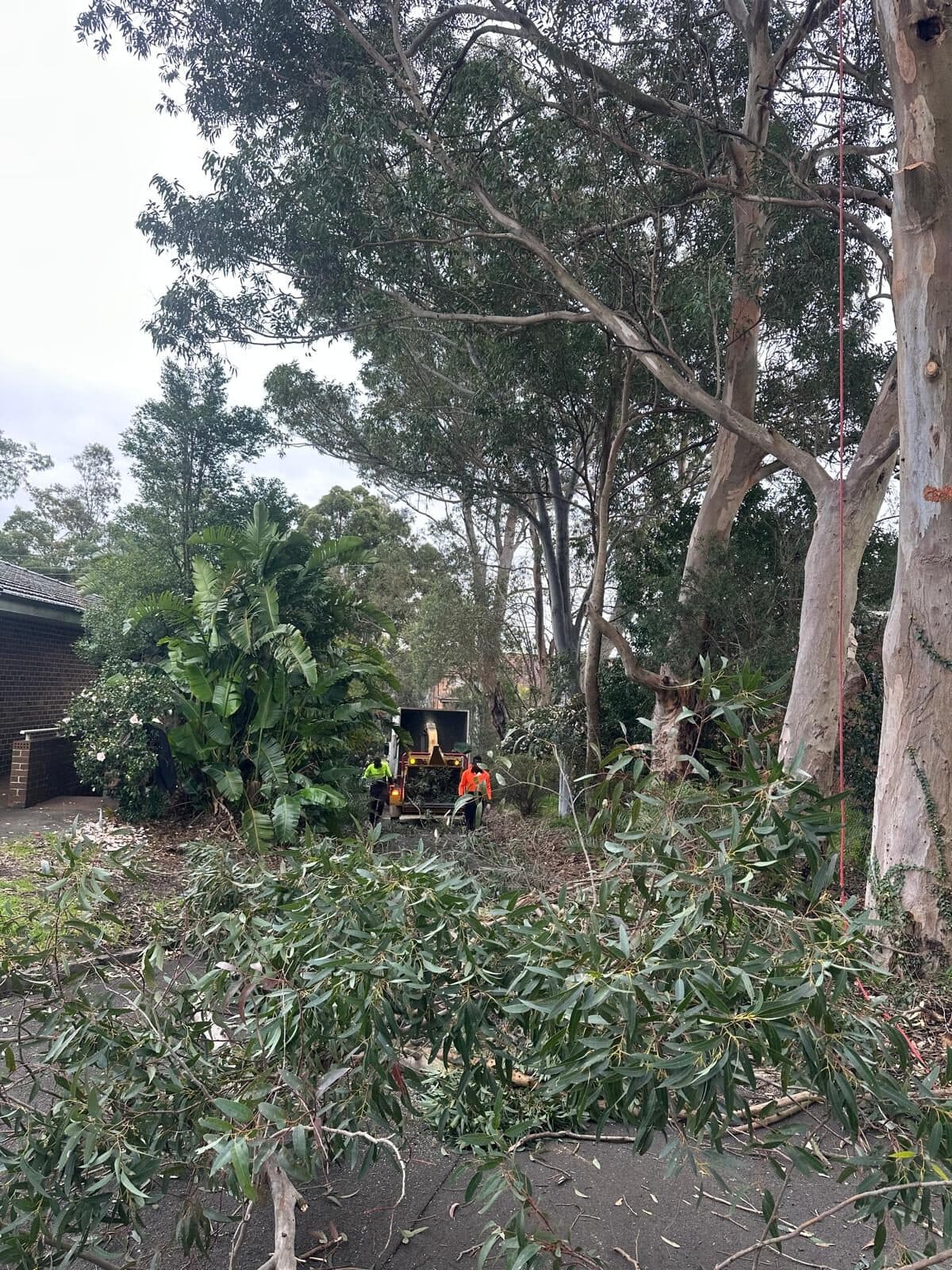
When grinding is planned with the tree removal, the machine route and cut height can be decided together. The stump is then dealt with before landscaping closes off access. The two jobs can also be done separately, which is common after urgent or storm work where making the site safe was the priority. Several stumps ground in one visit can share the set-up, but each stump is still its own piece of work.
Locate services before disturbing the ground
Water, sewer, stormwater, gas, electrical and communications lines can run close to trees, and roots often follow them. Use Before You Dig Australia (opens in new tab) to request plans from network owners before work. These plans may not show exact depths. They do not include private services such as irrigation, garden lighting, stormwater lines or cabling run by a previous owner.
Tell the crew about anything you know is buried, and about earlier works near the stump. Where a service is uncertain, it may need to be located on site before grinding. The ground area can also be limited around it.
Roots belonging to trees you are keeping need consideration too. Grinding into the root zone of a retained tree, or a neighbour's tree, can affect its health and stability. Agree the edge of the work area before the machine starts.
Decide what happens to the grindings
What you want done with the mess
Grinding produces a pile of wood chips mixed with soil, usually more than people expect from a large stump. Agree beforehand whether the grindings will:
- be raked back into the hole
- be spread as mulch elsewhere in the garden
- be removed from the site
- be partly removed, with the hole topped up with soil
Chips used as a surface mulch are useful. However, large amounts of fresh wood dug into soil can tie up nitrogen as the wood decomposes, which slows plant growth. The Royal Horticultural Society's stump removal guidance (opens in new tab) explains this distinction between removing the obstruction and preparing the ground for planting.
Match the finish to the next use
Straight after grinding, you are left with a hollow of loose chips and soil, often slightly mounded. As buried wood and loose material settle, the surface can sink over the following months. Plan to top it up.
- Lawn: remove most of the chips, add suitable soil, firm and level it, then turf or seed. Expect to top up any dip that appears later.
- Garden bed: replace most of the woody material with good soil before planting.
- Replacement tree: plant a little to one side of the old stump where practical. Old roots, settling ground and woody material make the original spot a poor planting hole.
- Paving, footings or a structure: have the designer or builder specify the ground preparation. Grinding is not certification that the site is ready for construction.
Some species can reshoot from roots left after grinding. Grinding often reduces this, but it does not guarantee every species will stop. The remaining-roots guide covers regrowth and settlement in more detail.
We grind single stumps, groups of stumps and stumps left from earlier removals across Sydney. Our stump grinding service explains what the work includes. The stump grinding cost guide sets out the factors that shape a quote, with illustrative estimates rather than fixed prices.
Common questions
Originally published .

AA Tree Services Sydney
Tree services in Sydney
Our team includes an AQF Level 3-qualified arborist with more than 15 years of tree-work experience. We provide tree removal, pruning, lopping, tall hedge trimming and stump grinding for homes, strata and commercial properties across Sydney, and write these guides from that work.
About AA Tree Services