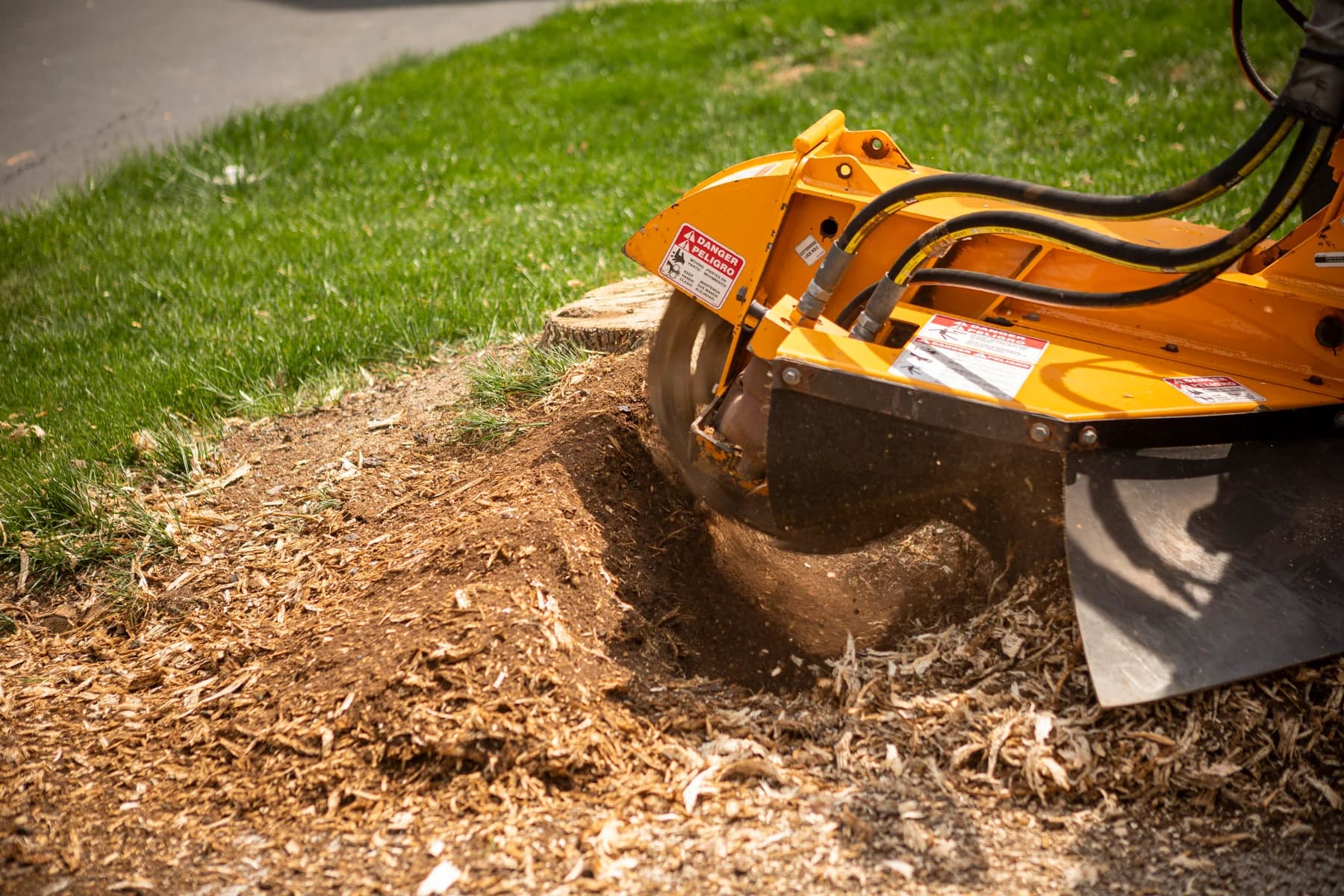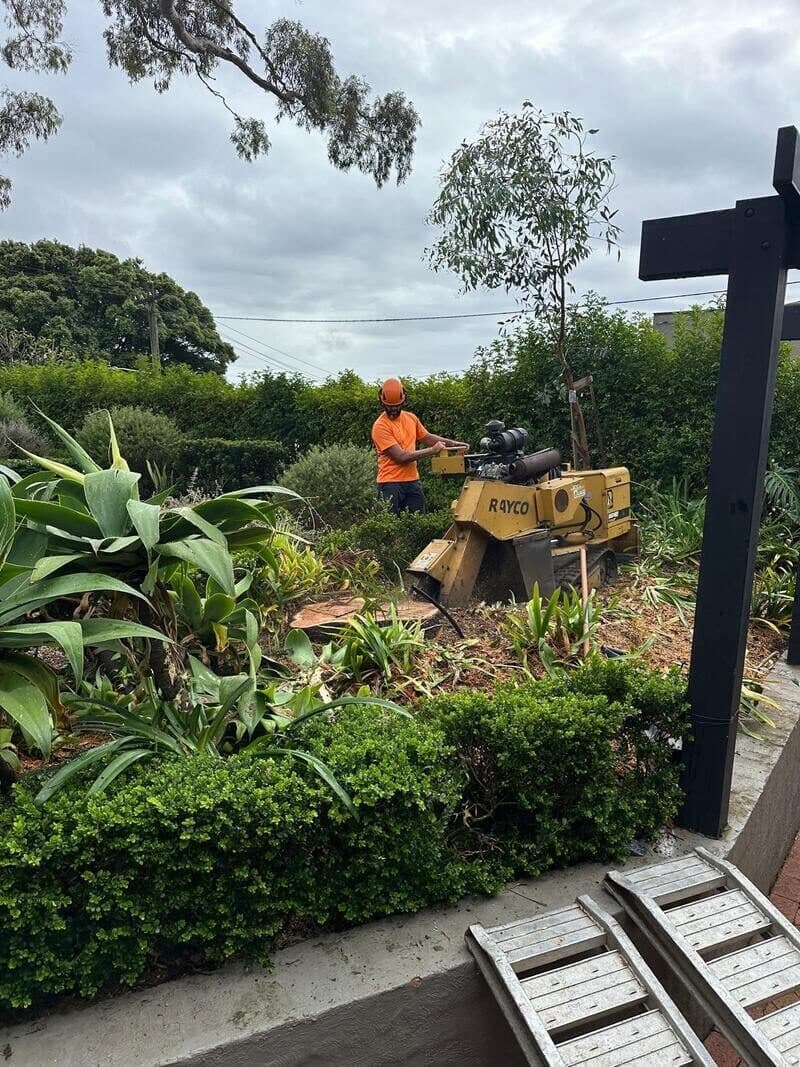
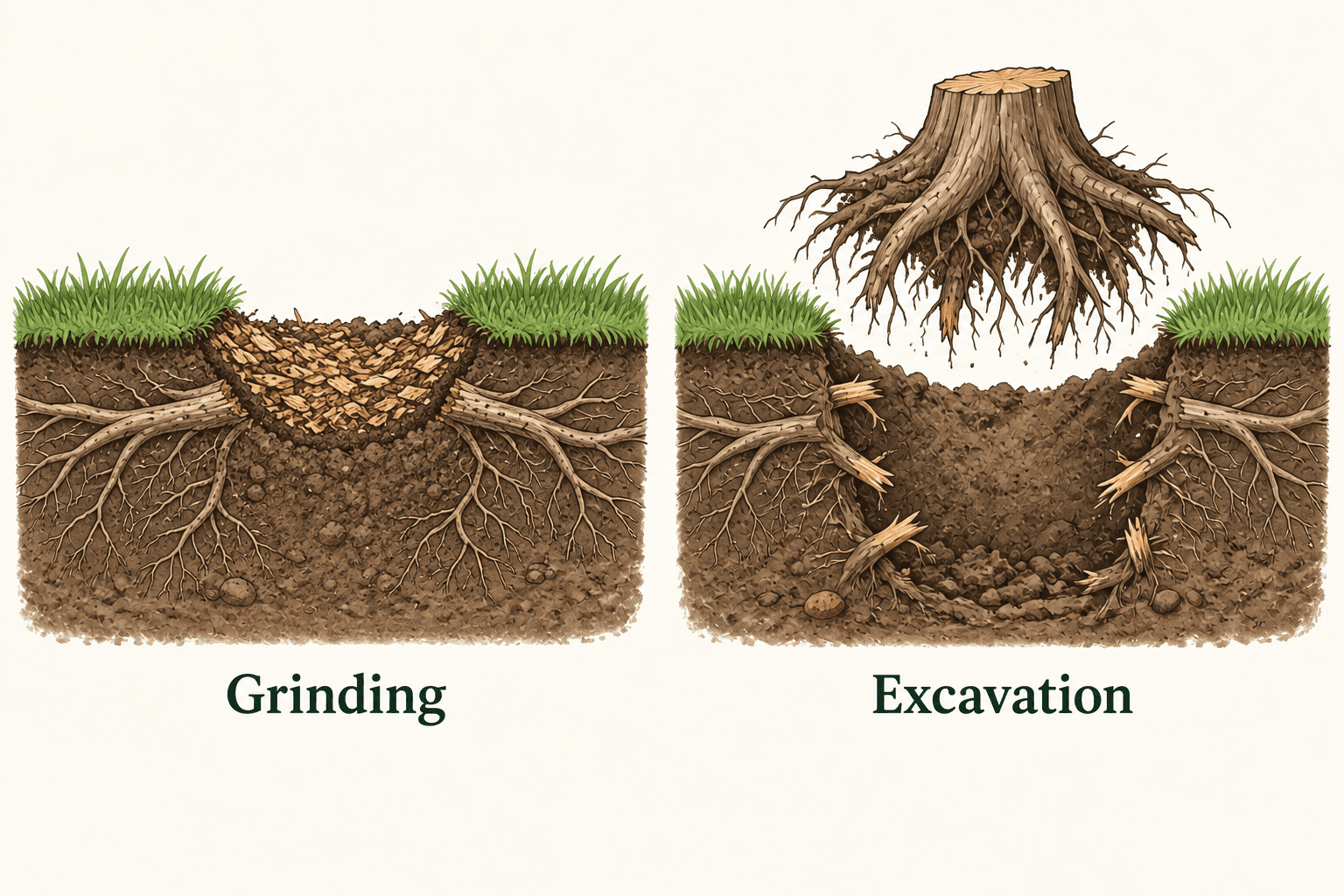
“Stump removal” can mean either grinding the stump or physically excavating the stump and root crown. Grinding reduces the central obstruction in place. Excavation lifts out a larger woody mass and usually disturbs a wider area.
Neither description means every fine root is removed. AA's advertised method is stump grinding, not complete root excavation.
Compare the methods
| Consideration | Stump grinding | Stump and root-crown excavation |
|---|---|---|
| How it works | A cutting wheel reduces wood within an agreed area and depth. | Machinery digs around and lifts out the stump and main root crown. |
| What remains | Roots and any wood outside the ground area. | Some severed and smaller roots can still remain beyond the excavation. |
| Ground disturbance | Concentrated around the stump and machine access. | Generally a larger hole and a wider disturbed area. |
| Material to manage | Wood fragments mixed with soil. | A bulky stump/root mass and excavated material. |
| Next steps | Soil preparation may be needed for lawn or planting. | Backfill and ground preparation are needed for the intended use. |
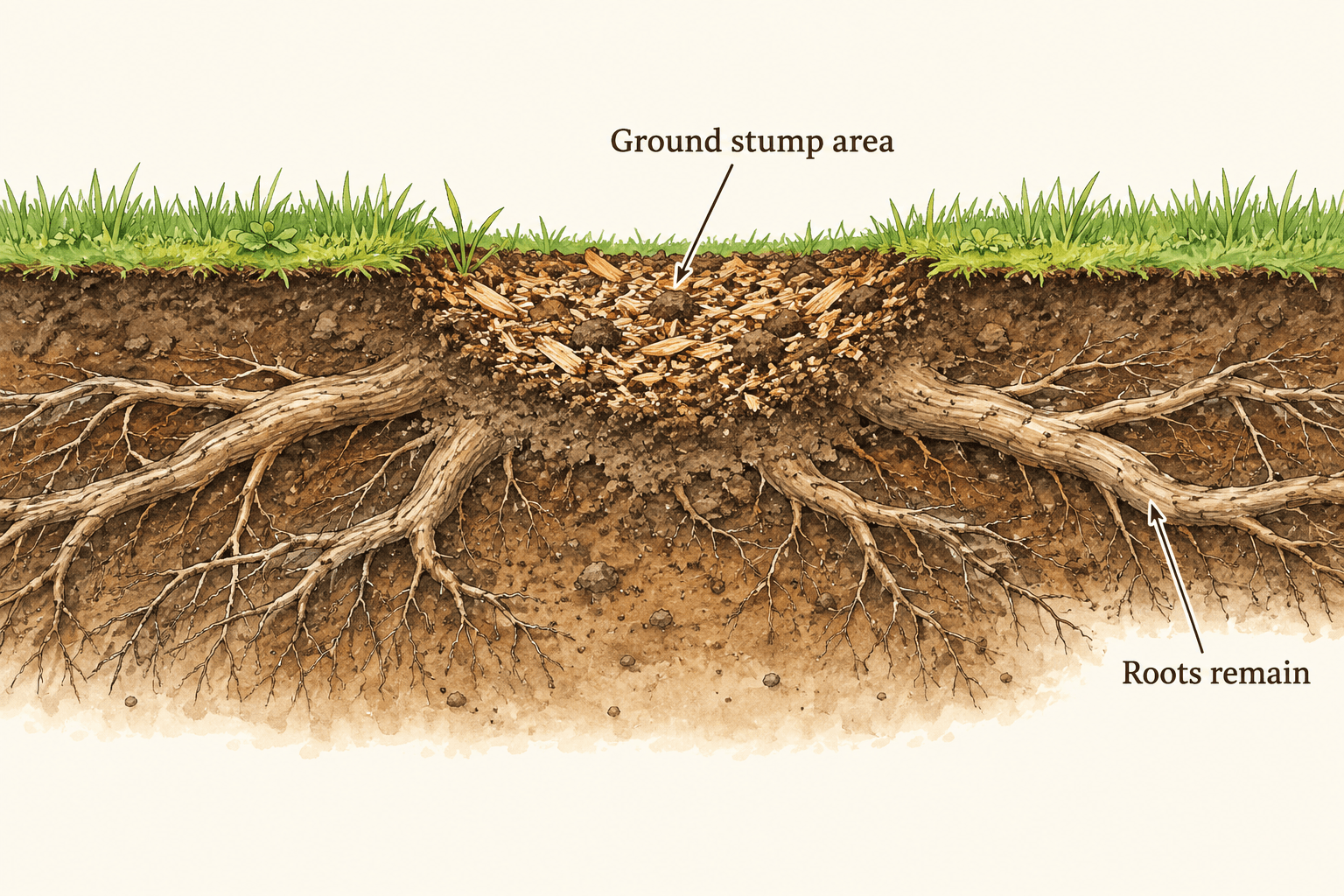
The illustration is schematic and not to scale. It does not specify an achievable depth or an approved construction detail.
Grinding suits many garden obstructions
Grinding can remove a stump that interferes with mowing or occupies a garden bed without lifting the full root crown. The access route, root flare and underground conditions determine the practical scope.
It leaves loose grindings, not a finished lawn or prepared foundation. Roots outside the agreed area remain and can decay over time. See what happens to roots after grinding for settlement and regrowth considerations.
Excavation may be needed for a different objective
A building footprint, particular ground-preparation requirement or root mass in an excavation zone may call for removal beyond grinding. The designer, builder or relevant specialist should establish what must be removed and how the ground will be prepared.
Do not assume excavation is always preferable because more wood is removed. It can disturb surrounding soil, services, structures and roots belonging to retained trees. It also requires space to operate and handle the root mass.
If full excavation is required, arrange the appropriate excavation scope separately. An AA stump-grinding enquiry should not be treated as confirmation that complete root excavation is offered.
Access and buried services apply to both
Gate widths, steps, slopes, nearby walls and the working area influence what machinery can reach the site. Underground service information and locating must be addressed before ground disturbance.
Before You Dig Australia (opens in new tab) is a starting point, not proof that the area is clear. Private services may be absent from plans, and locations or depths may need further confirmation.
Cutting substantial roots near a tree that will remain can affect it. Do not extend either operation into retained-tree roots without considering the consequences and any protection conditions.
Choose according to the finished use
Tell the person scoping the work whether the space is intended for grass, planting, paving or construction. That makes the required depth, width, material handling and follow-on work clearer.
Compare like-for-like scope, not just the word “removal”. The stump-grinding cost guide gives a typical grinding price range; it does not cover excavation or a construction-ready finish.
Common questions
Originally published .

AA Tree Services Sydney
Tree services in Sydney
Our team includes an AQF Level 3-qualified arborist with more than 15 years of tree-work experience. We provide tree removal, pruning, lopping, tall hedge trimming and stump grinding for homes, strata and commercial properties across Sydney, and write these guides from that work.
About AA Tree Services