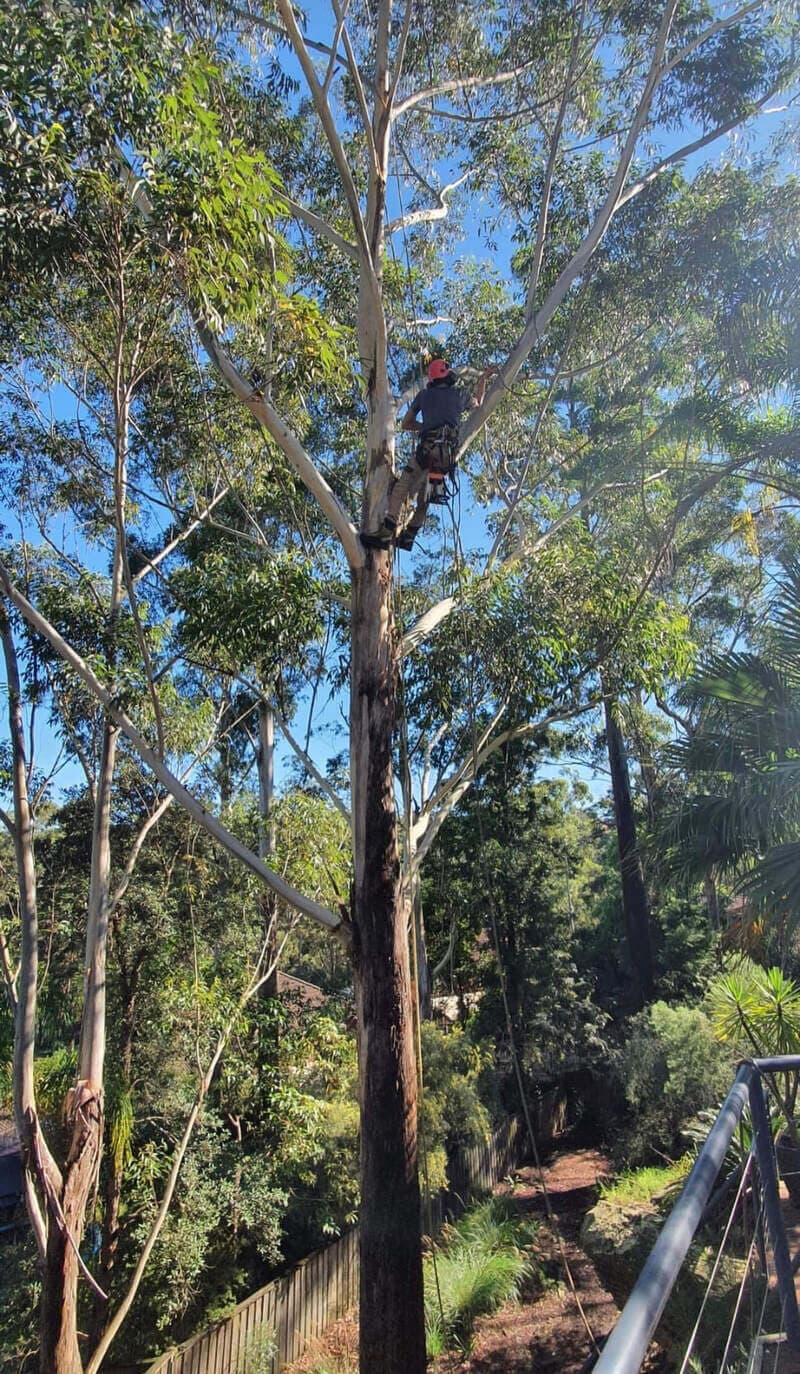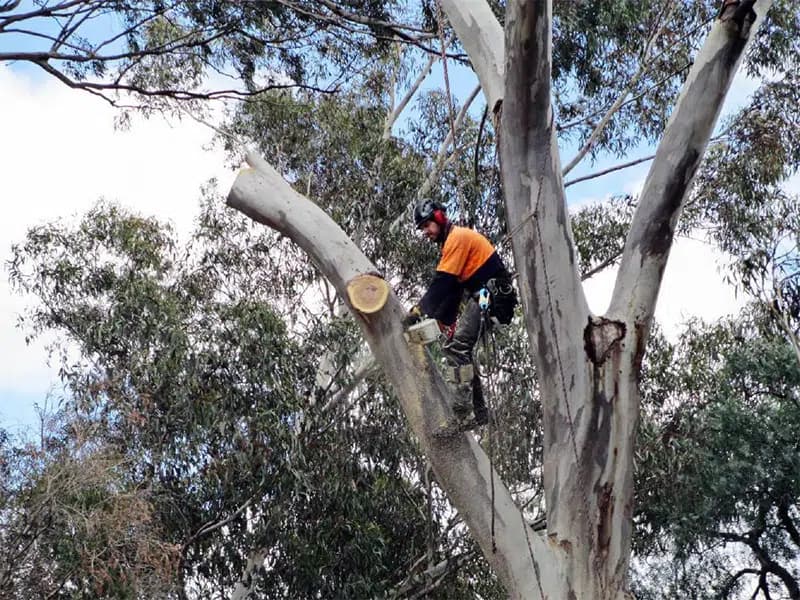
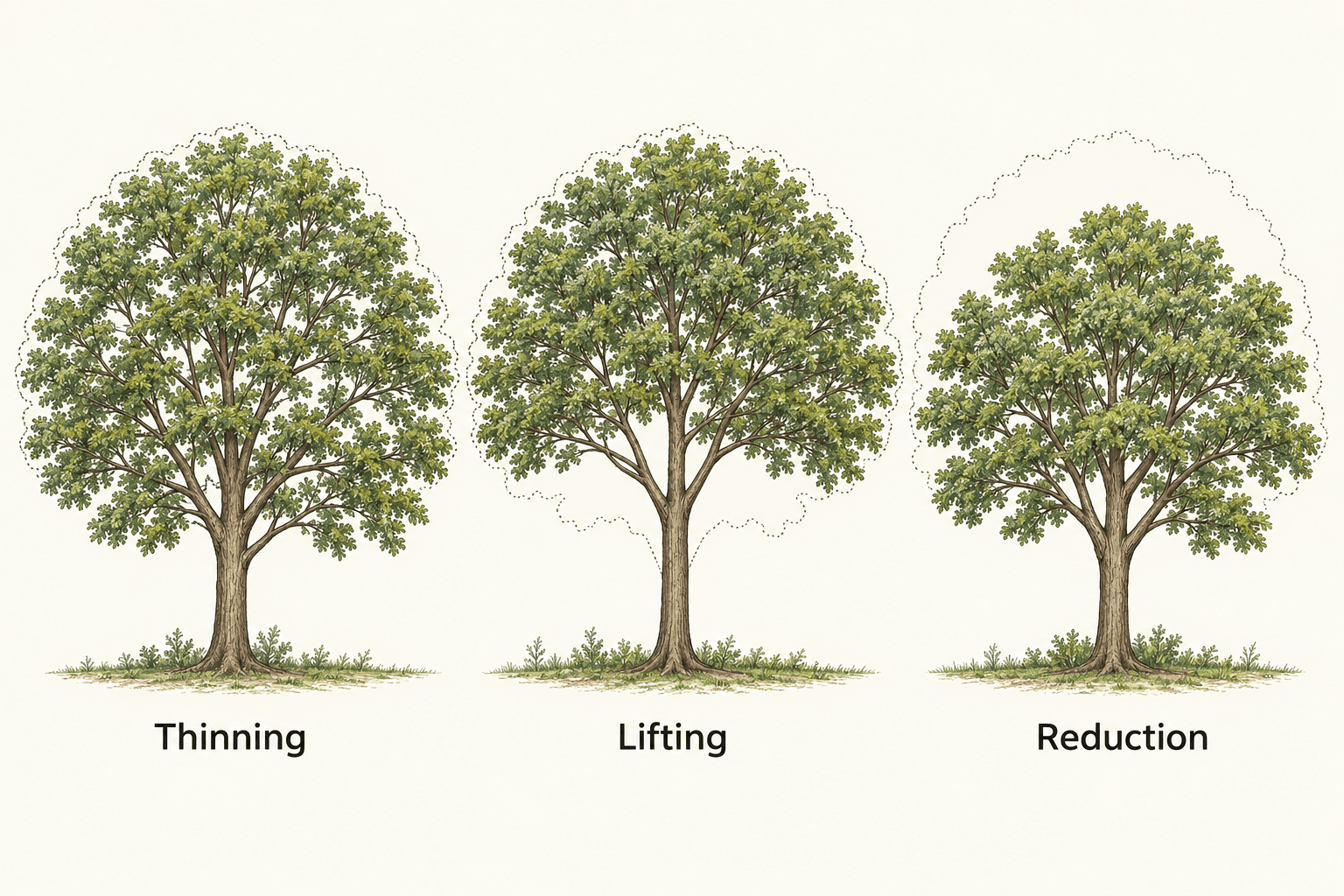
Crown thinning changes canopy density, crown lifting increases clearance beneath the branches, and crown reduction decreases selected parts of the canopy's height or spread. They are different pruning methods, not three names for cutting a tree smaller.
The suitable method depends on the tree's structure and the clearance or canopy problem. More cutting is not automatically a better result.
Compare the three methods
| Method | Main purpose | What it does not establish |
|---|---|---|
| Crown thinning | Selectively remove branches within the canopy while retaining its overall outline. | It does not substantially lower the tree or guarantee storm resistance. |
| Crown lifting | Remove appropriate lower branches to increase clearance below the canopy. | It does not reduce the upper canopy's height. |
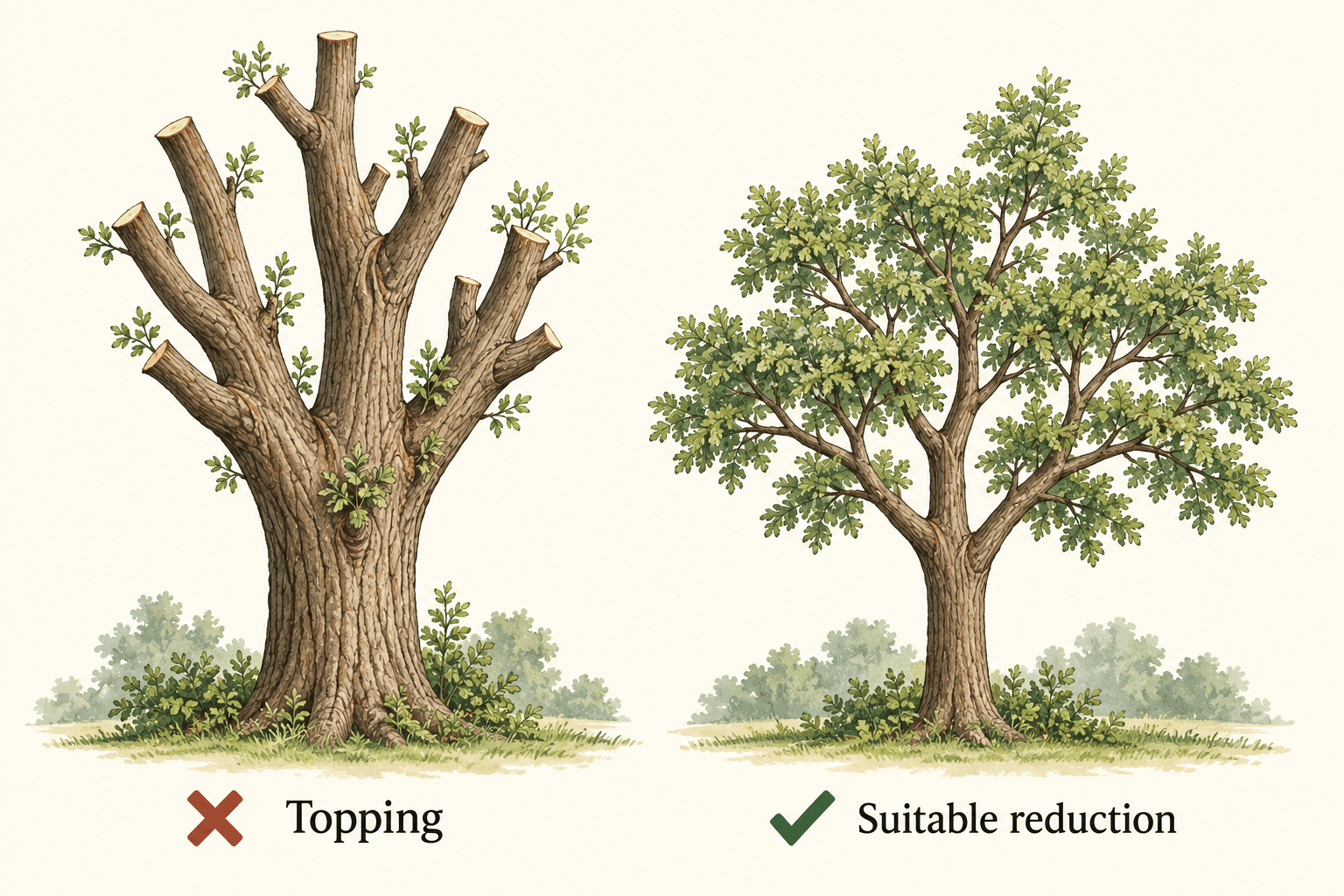
| Crown reduction | Shorten selected branches back to suitable laterals to reduce height or spread. | It is not indiscriminate topping or a promise that any tree can be kept at a chosen size. |
The feature illustration is a simplified explanation, not a cutting specification for a particular tree.
Crown thinning: change density, not height
Thinning may help manage selected crowded or competing branches. The aim is a balanced canopy, not an empty centre with foliage left only at the ends. Excessive removal can weaken the tree's response and expose previously shaded parts.
If the main issue is a single branch over the roof, targeted clearance may be more appropriate than thinning the entire crown. Ask what specific branches need attention and what the proposed work would achieve.
Crown lifting: create clearance below
Lifting addresses lower branches that interfere with paths, driveways or usable space beneath a tree. Branch size, position and the proportion of live canopy that would remain are important.
Removing every low branch at once can leave large wounds or an unbalanced tree. Mature branches are not equivalent to small branches on a young tree, and the desired clearance may not be achievable through one pruning visit.
Crown reduction: retain a suitable branch structure
Reduction shortens appropriate branches to suitable lateral growth. It should leave a coherent canopy and take the tree's condition and ability to respond into account.
Topping cuts main branches back indiscriminately to stubs. It can create decay, vigorous replacement shoots and ongoing structural concerns. The International Society of Arboriculture explains why topping is harmful (opens in new tab). A customer asking for “lopping” may mean size management, but that does not make topping the suitable method.
Decide what the property needs
Start with the specific outcome: clearance over a driveway, a branch away from the roof, or a limited reduction in spread. Then assess whether the tree can support it. A large tree in a small space may not be made permanently suitable by repeated reduction.
Tree condition, species, previous pruning, nearby structures and council limits all influence the choice. These methods are not a diagnosis of stability and cannot guarantee that a tree will not fail.
For professional work, see tree pruning and trimming. Our guide to pruning timing explains seasonal considerations, while the Sydney council guide helps establish the permission pathway.
Common questions
Originally published .

AA Tree Services Sydney
Tree services in Sydney
Our team includes an AQF Level 3-qualified arborist with more than 15 years of tree-work experience. We provide tree removal, pruning, lopping, tall hedge trimming and stump grinding for homes, strata and commercial properties across Sydney, and write these guides from that work.
About AA Tree Services