When it comes to maintaining the trees on your Sydney property, you've likely heard both terms "tree lopping" and "tree pruning" used interchangeably. However, these are two very different practices with vastly different outcomes for your trees. Understanding the difference between tree lopping and pruning is crucial for making informed decisions about your tree care needs.
At AA Tree Services Sydney, we're committed to educating property owners about proper tree care practices. In this comprehensive guide, we'll explain the key differences between lopping and pruning, explore why professional arborists almost always recommend pruning, and help you determine the best approach for your trees.
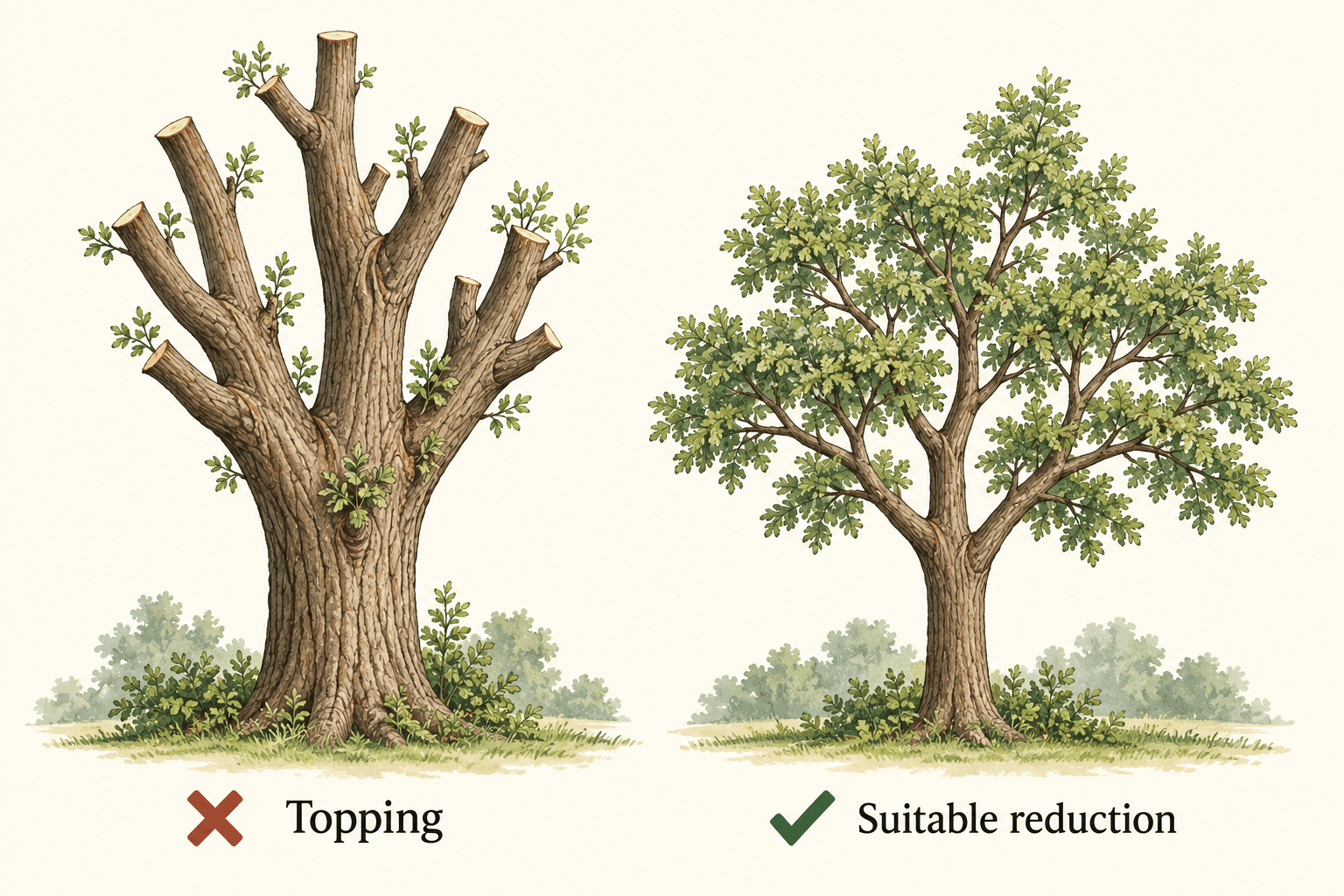
Tree lopping is the practice of cutting large branches or the main trunk of a tree without regard for the tree's natural growth patterns or long-term health. It typically involves:
Property owners might request tree lopping for various reasons, including:
Important note: While these goals might seem reasonable, tree lopping is rarely the appropriate solution and can cause severe, lasting damage to your trees.
Tree pruning is a skilled horticultural practice that involves the selective removal of branches to improve tree health, structure, and appearance. Professional tree pruning in Sydney follows established arboricultural standards and includes:
Certified arborists use several pruning techniques, each designed for specific purposes:
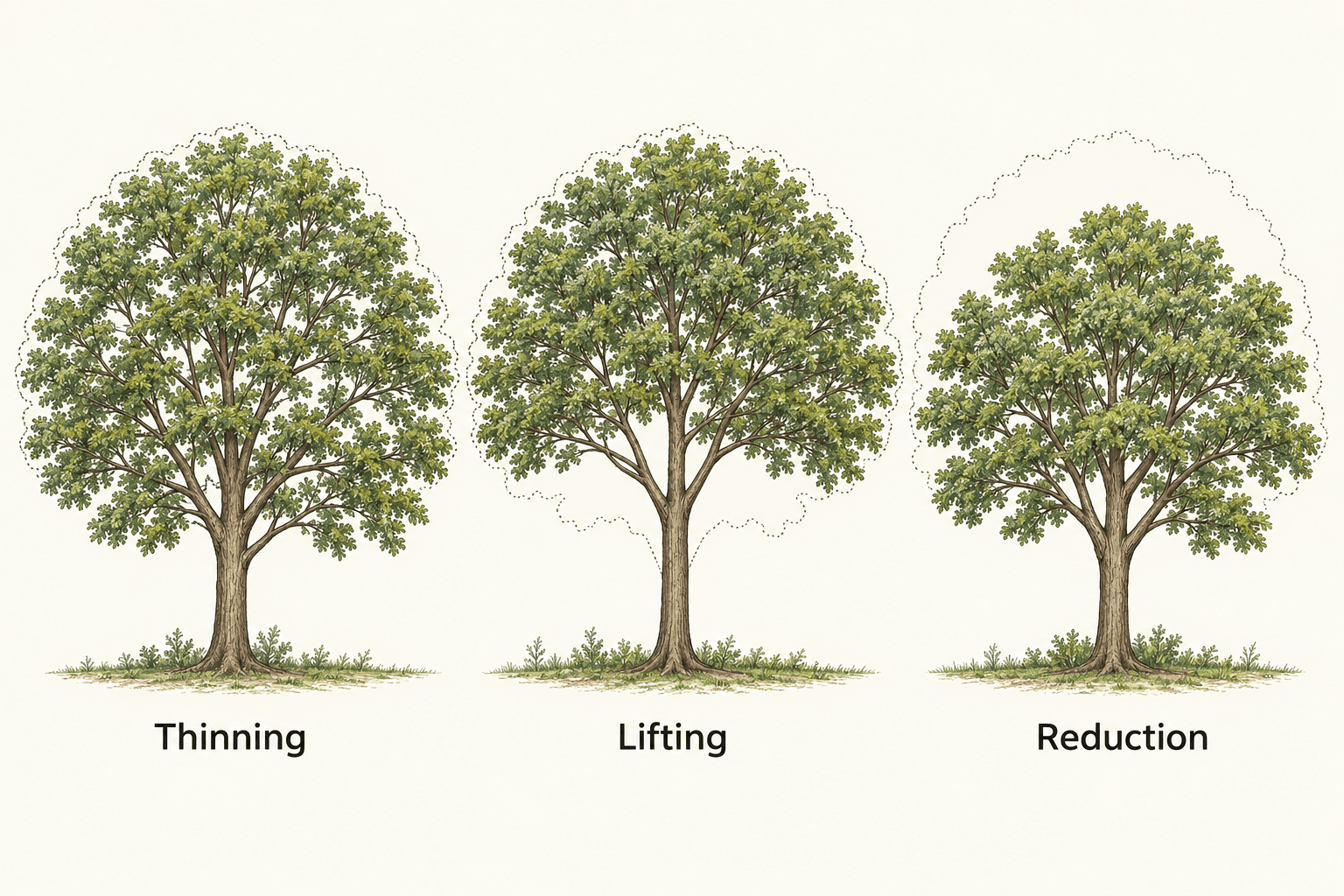
Selective removal of branches throughout the crown to reduce density while maintaining the tree's natural shape. This improves light penetration and air circulation.
Removing lower branches to provide clearance for buildings, vehicles, pedestrians, or views while maintaining the tree's overall health.
Carefully reducing the overall size of the canopy by pruning back to lateral branches, maintaining the tree's natural form and structural integrity.
Removing dead, dying, or diseased branches to improve safety and tree health.
Training young trees to develop strong branch architecture, preventing future problems.
Learn more about when to prune different tree species in Sydney for optimal results.
| Aspect | Tree Lopping | Professional Pruning |
|---|---|---|
| Cutting Method | Indiscriminate, large cuts | Selective, strategic cuts |
| Amount Removed | Often 50%+ of canopy | Typically 15-25% maximum |
| Cut Location | Random locations, often leaving stubs | At branch collars or lateral branches |
| Tree Shape | Destroys natural form | Maintains or enhances natural form |
| Planning Required | Minimal to none | Extensive assessment and planning |
| Standards Followed | None | AS4373 (Australian Standard) |
Effects of Tree Lopping:
Effects of Professional Pruning:
Initial Costs:
Tree lopping might appear cheaper initially, sometimes 20-30% less than professional pruning. However, this apparent savings is misleading when you consider long-term costs.
Long-Term Costs:
| Cost Factor | After Lopping | After Professional Pruning |
|---|---|---|
| Frequency of Service | Every 1-2 years (rapid regrowth) | Every 3-5 years |
| Disease Treatment | $500-$2,000+ (likely needed) | Rarely necessary |
| Emergency Removals | High risk of branch failure | Minimized risk |
| Potential Tree Removal | $2,000-$10,000+ (tree may die) | Tree remains healthy |
| Property Damage Risk | Increased (weak branches) | Minimized |
| 5-Year Total Cost | $3,000-$15,000+ | $1,500-$3,000 |
Professional arborists spend years learning about tree biology and proper care techniques. They understand that trees are complex living organisms that require careful treatment. Pruning respects the tree's natural defense mechanisms and growth patterns, while lopping essentially inflicts severe trauma.
Lopped trees are significantly more dangerous than properly pruned trees:
Professional pruning follows AS4373 (Pruning of Amenity Trees), the Australian Standard that provides guidelines for proper tree care. This standard explicitly discourages lopping practices and recommends proper pruning techniques.
As shown in our cost comparison above, investing in professional pruning saves money over time by:
Mature trees provide enormous environmental benefits:
Professional pruning preserves these trees and their benefits, while lopping often leads to their premature loss.
Well-maintained trees can add 10-20% to property values, while poorly maintained or lopped trees decrease appeal and value. Professional pruning is an investment in your property's worth.
Tree lopping exists in a gray area legally. While not explicitly illegal in most Sydney councils, several regulations affect the practice:
Qualified arborists who are members of professional organizations like Arboriculture Australia are bound by codes of practice that discourage lopping. Additionally:
Sydney has numerous protected trees under various schemes:
While lopping is almost never recommended, there are rare situations where more aggressive pruning might be necessary:
After severe weather, damaged branches must be removed immediately for safety. However, even emergency work should follow proper pruning techniques as much as possible. Learn more about handling storm-damaged trees.
Trees with significant disease may require heavy pruning to remove infected areas, but this should only be done under the guidance of a qualified arborist who can assess whether the tree can survive.
Trees growing into power lines require clearance, but this should be done using crown reduction techniques rather than indiscriminate lopping. In Sydney, only authorized contractors should work near power lines.
Trees with severe structural defects might need significant reduction, but this should be done strategically with a long-term management plan, not through one-time lopping.
Important: Even in these situations, certified arborists will use proper pruning techniques rather than lopping. If a tree is too damaged or diseased to save through proper pruning, removal and replacement is usually the better option.
Solution: Crown reduction pruning by a qualified arborist, which reduces height while maintaining tree health and structure. If the tree is fundamentally too large for its location, consider professional tree removal and replacement with an appropriate species.
Solution: Crown thinning to allow views through the tree, or crown raising to lift lower branches. Strategic selective pruning can often improve views without damaging the tree.
Solution: Professional arborist assessment to determine actual risk level. If the tree is structurally sound, targeted pruning can reduce weight on concerning branches. If the tree is genuinely dangerous, proper removal is safer than lopping.
Solution: Deadwooding to remove problem branches, plus assessment of tree health. Some leaf drop is natural and seasonal. If the tree is genuinely dropping excessive material due to health issues, addressing the underlying problem is more effective than lopping.
Solution: Professional pruning is often completed faster than you might think, and the results are immediately visible and long-lasting. While lopping might seem dramatic, the resulting regrowth creates more problems quickly.
Solution: Consider long-term costs shown in our comparison table above. Professional pruning is an investment that saves money over time. Many services offer payment plans or can phase work over multiple seasons if needed.
To ensure your trees receive proper care, look for these qualifications:
At AA Tree Services Sydney, we never perform tree lopping. Instead, we provide professional pruning services that prioritize tree health, safety, and aesthetics. Our approach includes:
Every job begins with a thorough evaluation by our qualified arborists who assess:
Based on our assessment, we develop a pruning strategy that:
Our team performs all work using:
After completing your pruning work, we provide:
In 2018, a Baulkham Hills property owner had three large eucalyptus trees "topped" by an unlicensed operator to improve views. Initial cost: $1,200.
Outcome over 5 years:
A neighboring property with similar trees chose professional crown reduction pruning in 2018. Initial cost: $1,800.
Outcome over 5 years:
The difference: Professional pruning cost $600 more initially but saved over $6,000 while preserving valuable trees and protecting the property.
A: Professional arborists do not recommend tree lopping under any circumstances. There are always better alternatives using proper pruning techniques. Even in emergency situations, cuts should be made properly to promote healing and tree health.
A: Signs of past lopping include: large, healed-over stubs; dense clusters of weak growth emerging from old cut sites; flat-topped appearance; significant dead sections; and overall poor structure. If you suspect your tree has been lopped, have it assessed by a qualified arborist.
A: Sometimes, but not always. Trees that have been lopped require professional assessment to determine if they can recover. Recovery involves careful selective pruning over several years to develop better structure. Some trees never fully recover and may need eventual removal.
A: Professional pruning typically costs 20-40% more initially than lopping, but saves significantly over time. A medium-sized tree might cost $800-1,200 for professional pruning vs. $600-800 for lopping, but the pruned tree requires less frequent maintenance and avoids costly problems.
A: Most trees benefit from professional evaluation every 3-5 years, with pruning performed as needed. Young trees might need more frequent structural pruning, while mature, healthy trees might need only occasional maintenance. Learn more about optimal pruning schedules for Sydney trees.
A: Crown reduction pruning can significantly reduce tree size (typically 15-25% of height/spread) while maintaining health and appearance. While lopping might remove more material initially, the rapid weak regrowth means the tree often returns to or exceeds its original size within 2-3 years.
A: Contact a qualified arborist immediately for assessment. They can determine if the tree can be saved and develop a recovery plan. Document the damage with photos, as you may have recourse if the work was done without your authorization or violated council regulations.
A: It depends on your council, tree size, and extent of work. Many councils require development consent for significant pruning of protected trees. Professional tree services can help determine if approval is needed. Read our guide on council approval requirements in Sydney.
A: Small maintenance tasks (pruning branches under 5cm diameter that you can reach from the ground) can be done by homeowners. Anything larger, higher, or more complex should be left to professionals for safety reasons and to avoid damaging your trees.
A: It depends on the tree species and reason for pruning. Generally, late winter to early spring is ideal for most species, but some trees have specific timing requirements. Our comprehensive seasonal pruning guide covers timing for common Sydney species.
The evidence is clear: professional tree pruning is superior to tree lopping in every meaningful way. While lopping might seem like a quick, cheap solution, it damages trees, creates safety hazards, and costs more in the long run.
Key Takeaways:
At AA Tree Services Sydney, we're committed to proper tree care that protects your investment and preserves Sydney's urban forest. Our qualified arborists bring years of training and experience to every job, ensuring your trees receive the expert care they deserve.
Ready to give your trees the professional care they deserve? Contact AA Tree Services Sydney today for a comprehensive tree assessment and quote for proper pruning services. We serve all areas of Sydney and are available for emergency consultations.
Call us at 0497 777 735 or request a free quote online. Let us show you the AA Tree Services difference – where every tree receives expert care based on sound arboricultural science, not shortcuts.