Quick answer: There is no single best month to prune every tree in Sydney. For planned work, prune deciduous trees while they are bare in late autumn and winter, before the spring growth flush. Prune many natives and flowering trees lightly just after they finish flowering. Light removal of dead or broken branches can be done at any time of year. Avoid heavy cuts during heatwaves and drought, and straight after the spring flush. Check for nesting birds from late winter into summer. A branch that is cracked, hanging or resting on the roof should not wait for a better season.
The timing of a cut affects how much stress the tree carries, how quickly new growth closes over the wound and whether you lose next season's flowers or fruit. The right date therefore depends on three things: why the tree is being pruned, what sort of tree it is and how it is coping at the moment.
Start with the reason for pruning
Every cut should have a purpose. A branch rubbing on the roof, deadwood over a path, a canopy shading a lawn and a fruit tree that has grown out of reach are different jobs. Each one has a different timing decision.
- Safety and risk reduction: dead, cracked, split or hanging branches. Timing comes second to the hazard.
- Clearance: branches touching the roof, gutters, walls, driveways or a neighbour's structures. These can usually be planned, but should not be left until the growth is causing damage.
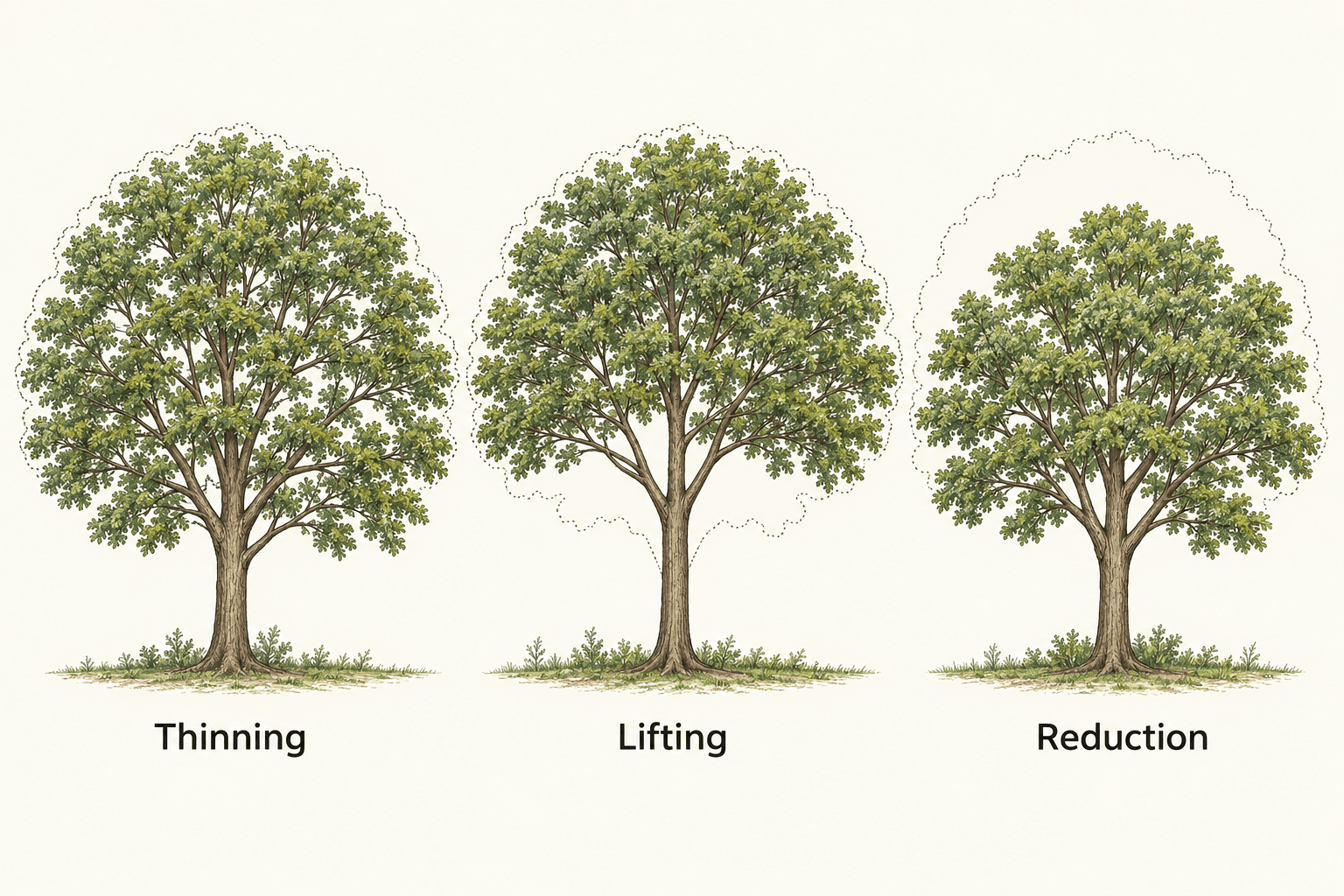
- Canopy management: selective thinning, crown lifting or a suitable reduction. Timing matters more because more live foliage is removed.
- Flowers, fruit and screening: the cut needs to protect next season's display, crop or privacy.
When not to wait for the right season
Ideal timing applies to maintenance, not to hazards. Arrange prompt attention if you notice:
- a broken or hanging branch, or one that has cracked at the union
- storm damage, or debris lodged high in the canopy
- a new lean, lifting soil or roots around the base
- limbs bearing heavily on the house, fence or a power line
- a large dead limb over a path, driveway or play area
Keep people and vehicles clear of the area below. Call 000 for immediate life-threatening danger. For emergency storm assistance, call NSW SES on 132 500. Our guide to 7 signs your tree needs professional attention explains which changes deserve a closer look.
Match the timing to the tree
The International Society of Arboriculture's pruning guidance (opens in new tab) gives two principles that work well in Sydney. Growth and wound closure are generally best when pruning happens before the spring growth flush. Heavy pruning of live growth just after that flush should be avoided, especially on weak trees. Light removal of dead, weak or diseased branches can be done throughout the year.
| Tree type | Usual planned window | What to watch |
|---|---|---|
| Deciduous trees | Late autumn to winter, while bare and before spring bud burst | Structural problems are easier to see; avoid heavy cuts once new leaves are expanding. |
| Eucalypts, angophoras and other large natives | Deadwood and clearance can be done year-round; plan larger work for milder weather | They rarely need routine shaping; avoid heavy reductions in hot, dry spells. |
| Native shrubs and small trees | Lightly, just after flowering | Many do not reshoot well from old, bare wood. |
| Flowering trees | Depends on whether flowers form on old or new growth | Cutting at the wrong time removes next season's flowers. |
| Fruit trees | Depends on the species and fruiting wood | Disease risk and harvest timing matter; see the fruit-tree guide. |
| Hedges and screening plants | Light, regular trims during the growing season | Heavy cutting in summer heat can scorch exposed foliage; check for nests. |
Deciduous trees
Trees such as liquidambars, maples, ornamental pears and crepe myrtles lose their leaves in Sydney's cooler months. Once bare, their branch structure is easy to see, and crossing, rubbing or weak branches are easier to pick out. Planned structural work usually fits between leaf fall and bud burst. Avoid substantial cuts while the tree is leafing out, as it has just used stored energy to produce that growth.
Australian natives
Most large native trees, including eucalypts and angophoras, do not need regular shaping. Deadwood removal and clearance can be scheduled when they are needed. Heavier work is better avoided during prolonged heat or drought, when the tree is already under strain.
Shrubby natives and smaller flowering natives, such as grevilleas, bottlebrushes and banksias, are usually tip-pruned just after flowering. Gardening guidance from the Australian Plants Society NSW (opens in new tab) and others notes that many of these plants regrow poorly when cut back into old, bare wood, so keep cuts within the leafy growth.
Flowering trees
Ask whether the tree flowers on last season's wood or on new growth. Trees that flower on older wood, such as magnolias, are best pruned soon after flowering so the next season's buds are not removed. Trees that flower on the current season's growth, such as crepe myrtles, can be pruned in late winter without losing that summer's display. Jacarandas often respond to heavy cutting with dense, upright regrowth. Selective work suits them better than a hard cut.
Fruit trees
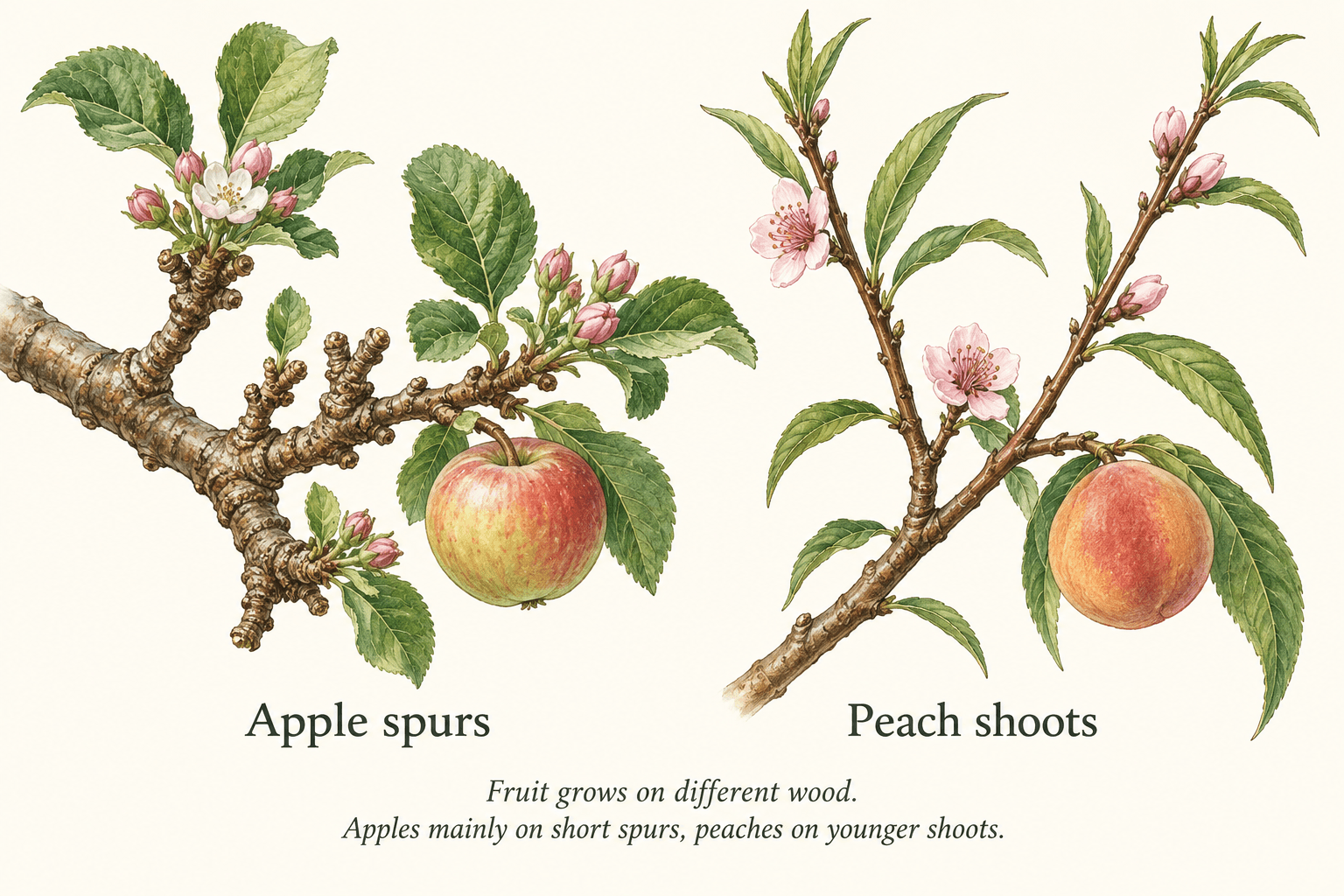
Fruit trees follow their fruiting wood rather than one calendar. Apples and pears, stone fruit and citrus are managed differently, and disease risk can make wet, windy weather a poor time to cut some stone fruit. Our fruit-tree pruning guide explains the main distinctions.
Hedges and screening plants
Hedges and screens are usually kept in shape with lighter trims through the growing season rather than one heavy cut a year. Avoid cutting a hedge hard in a heatwave, when newly exposed leaves can scorch. Many conifers do not reshoot from bare wood, so a hard reduction can leave a permanent gap. Dense hedges are also common nesting sites. For tall screens, see our tall hedge trimming service and the hedge trimming cost guide.
Weather, condition and wildlife
A suitable month does not guarantee a suitable day, or a tree that can tolerate the planned work.
How the tree is doing
A tree that is drought-stressed, recovering from root damage or construction, or already showing dieback has less energy to respond to heavy pruning. In that case, a lighter scope, or work staged over more than one visit, is usually safer for the tree than one large cut.
The weather on the day
Heatwaves and long dry spells are poor times for heavy reductions. Bark and foliage that were shaded can scorch once exposed. Strong wind makes climbing and lowering branches less safe, and wet weather can spread some diseases through fresh wounds. Rescheduling a planned prune for the weather is usually the right call.
Nests, hollows and wildlife
All native birds, mammals and reptiles in NSW are protected under the Biodiversity Conservation Act 2016, and it is an offence to harm them without a licence. The NSW Government's native animal guidance (opens in new tab) explains these protections. Many Sydney birds breed from late winter into summer. Possums, some parrots and microbats use tree hollows throughout the year.
Look for nests, hollows and repeated wildlife activity before booking work. If an active nest is found, the work may need to avoid that section or be rescheduled until the young have left. If an animal is injured, call WIRES on 1300 094 737.
Trees near power lines
Ausgrid and Endeavour Energy both say that trimming within three metres of overhead power lines must only be done by suitably accredited workers. Property owners are usually responsible for trees on their land near the service line to their home. The network operator manages vegetation around its network assets that are not on private property. Check Ausgrid's tree trimming responsibilities (opens in new tab) or Endeavour Energy's vegetation guidance (opens in new tab), depending on your area, before booking ordinary pruning near lines.
Plan the next prune around growth
Timing mistakes that make more work later
- Waiting until branches are on the roof. By then, clearance often means larger cuts than a timely light prune.
- Cutting hard in a heatwave or drought. The tree loses foliage when it can least afford it.
- Pruning just before flowering. The display you wanted to keep is removed.
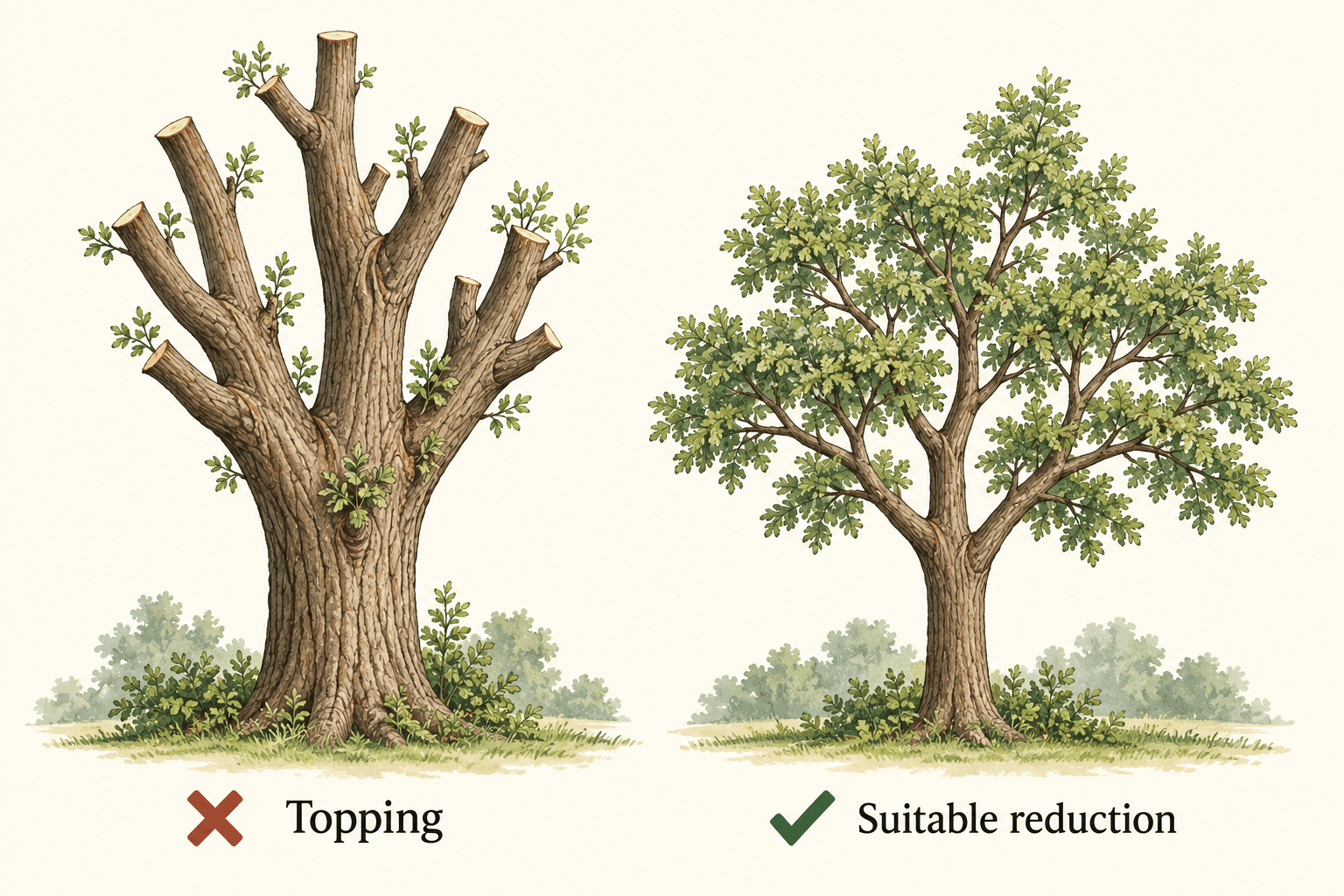
- Topping or lopping to stubs. The ISA describes topping as one of the most harmful pruning practices; regrowth tends to be weakly attached and quick to return.
- Stripping the inside of the canopy. Removing most inner branches pushes weight to the branch ends.
- Using pruning to fight a tree that has outgrown its position. If repeated heavy cuts are needed to keep a tree off a building, compare the long-term options, including tree removal.
Lighter, well-timed work usually keeps more options open than one heavy correction after years of neglect. Where size is the real issue, crown lifting, thinning or a suitable reduction is often better than repeatedly cutting the top of the canopy.
Keep a note of what was removed and when. It makes the next assessment easier and shows how quickly the tree regrows.
Check permission before choosing a date
Council tree controls can apply to pruning as well as removal. Rules vary between councils. They can depend on the tree's size and species, how much is being removed and whether heritage, habitat or development conditions apply. A limited exemption for minor pruning does not cover every tree. Use the Sydney council approval guide to find the rules for your address before booking major cuts.
Our tree pruning service covers deadwood removal, clearance, canopy management and fruit-tree work. Our team includes an AQF Level 3-qualified arborist, and the timing we suggest follows from the tree, its condition and what you want to achieve. Calls and urgent tree work are covered 24 hours a day, seven days a week, although arrival times depend on the situation and safe access.
Common questions
Originally published .

AA Tree Services Sydney
Tree services in Sydney
Our team includes an AQF Level 3-qualified arborist with more than 15 years of tree-work experience. We provide tree removal, pruning, lopping, tall hedge trimming and stump grinding for homes, strata and commercial properties across Sydney, and write these guides from that work.
About AA Tree Services