Fruit-tree pruning in Sydney should follow the species and the wood that carries its crop. Apples, peaches and citrus should not all receive the same winter cut. The aim is manageable structure and useful light without unnecessarily removing productive growth.
AA undertakes fruit-tree pruning as part of its tree pruning service. The guidance below explains the main decisions; it is not a cut-by-cut prescription for an unidentified tree.
Identify the fruiting wood first
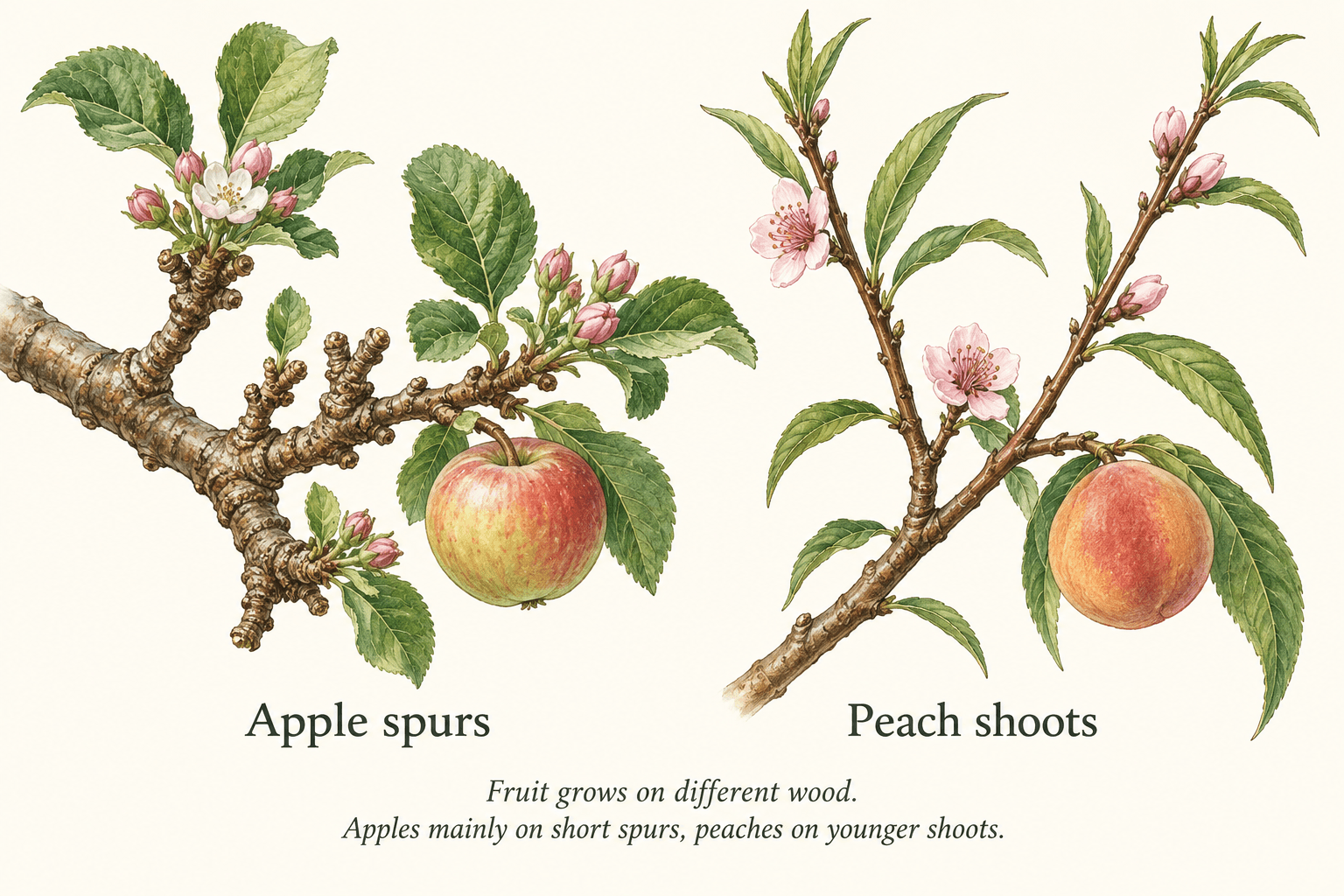
Many apples and pears carry fruit on short spurs, although tip-bearing varieties need different treatment. Peaches and nectarines mainly crop on younger shoots produced in the previous growing season. Removing that wood indiscriminately can remove the next crop.
The illustration shows these contrasting growth patterns schematically. Flowers and mature fruit are shown together to explain their position, not a real tree at a single moment in the season.
| Tree group | What to preserve or check | Timing considerations |
|---|---|---|
| Apples and pears | Productive spurs or tips, depending on the variety; the trained form also matters. | Winter structural work and summer growth control have different purposes. |
| Peaches and nectarines | Suitable younger fruiting shoots and replacement growth. | Consider post-harvest or early bud-burst work and local disease risk; avoid a blanket early-winter schedule. |
| Citrus | A useful leafy canopy, sound structure and accessible fruit. | Usually needs limited pruning; avoid frost exposure and excessive removal of protective shade. |
Apples and pears: consider the trained form
A freestanding apple tree and an espalier are managed differently. Removing all short side growth from a spur-bearing tree can sacrifice productive wood. On an overgrown tree, distinguish structural correction from annual control of new shoots.
The Royal Horticultural Society's apple-pruning guidance (opens in new tab) explains why trained forms and freestanding trees need different treatment. Its UK month references are not Sydney dates; local growth and conditions must guide the timing here.
Stone fruit: account for disease and replacement growth
Peaches and nectarines need suitable younger shoots for future crops. Retain a manageable framework while considering which growth will fruit and what will replace it. A hard overall cut does not reliably achieve that balance.
NSW horticultural guidance on nectarine diseases (opens in new tab) identifies wet, windy conditions and pruning wounds as considerations in bacterial canker management. Avoid applying a general dormant-season rule to every stone-fruit tree. The tree's health, harvest timing and local conditions should determine the approach. For symptoms of disease, seek a diagnosis rather than assuming pruning alone is the treatment.
Citrus: avoid unnecessary heavy cutting
NSW's citrus-growing guidance (opens in new tab) explains that citrus often needs limited pruning. Deadwood, crowded or crossing growth and shoots arising from the rootstock can need attention. Identify the graft and the origin of a shoot before deciding what to remove.
Heavy cutting can expose trunk and main branches to sunburn and remove substantial productive canopy. Do not strip a tree simply to make harvesting easier. Access improvements should be balanced against the foliage and structure retained.
Restore an overgrown tree carefully
Establish the species, general condition, previous cuts and desired size before choosing a restoration approach. Staged work may be more appropriate than a severe one-off reduction, but retaining every overgrown tree is not always realistic.
Pruning is also not a guarantee of fruit. Pollination, pests, disease, water, nutrition and weather can affect cropping. Avoid repeatedly cutting harder when the underlying problem has not been established.
Check the council requirements for the address. Fruit-tree exemptions differ, and native fruiting species or protected properties may be treated differently.
Common questions
Originally published .

AA Tree Services Sydney
Tree services in Sydney
Our team includes an AQF Level 3-qualified arborist with more than 15 years of tree-work experience. We provide tree removal, pruning, lopping, tall hedge trimming and stump grinding for homes, strata and commercial properties across Sydney, and write these guides from that work.
About AA Tree Services